
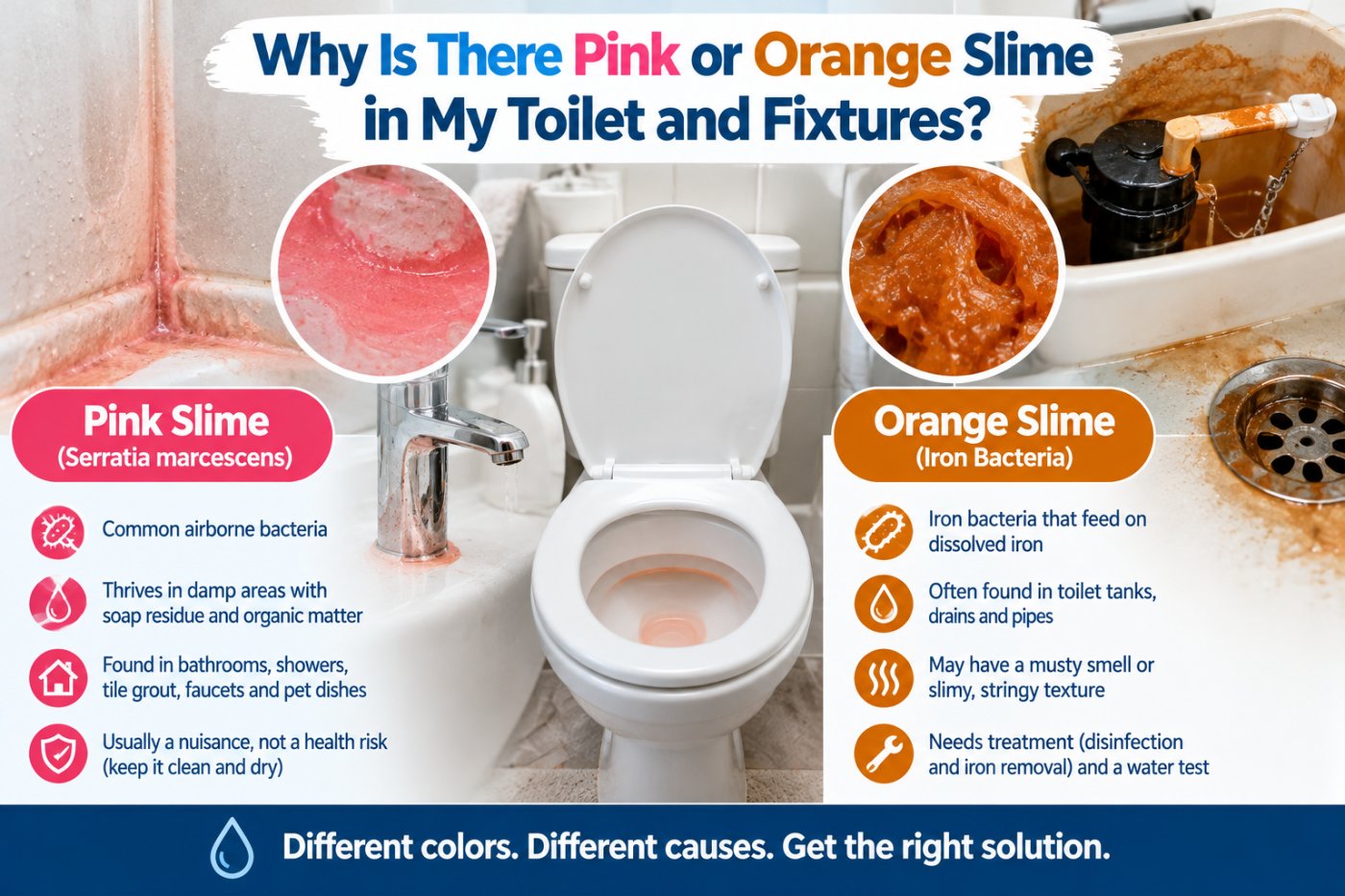
You lift the toilet lid or glance at the corner of the shower and there it is again, a slick film in pink or orange that you scrubbed away last week. It keeps coming back no matter how thoroughly you clean, and it is natural to wonder whether the water is to blame. The answer depends on the color and on where the slime appears. Pink and orange slime look like cousins, but they usually come from two very different sources, and only one of them has much to do with your water.
Pink Slime: A Bacteria That Lives in Damp Places
The pink or salmon colored film that collects around the toilet bowl waterline, in shower corners, on tile grout, along the base of faucets, and in pet water dishes is most often a bacterium called Serratia marcescens. It is common in the environment and travels through the air, so it can show up in a spotless home. It thrives wherever there is constant moisture and a little food, and soap residue, shampoo, and body oils are exactly that.
That is why pink slime tends to appear in bathrooms and why it returns so quickly after cleaning. Scrubbing removes what you can see, but the bacteria settle back in as soon as the surface is damp again. Rough, scaled surfaces give the film more to grip, which is one way hard water can make the problem worse, as we explain in our article on why Florida water leaves white buildup on faucets. Water treatment will not stop an airborne bacterium from landing in a damp bathroom, though, so the lasting fix is mostly about moisture control and cleaning habits.
For most healthy people pink slime is more of a nuisance than a danger. It is still an organism you want to keep under control, so clean it with a disinfecting bathroom cleaner rather than just wiping it, rinse well, and then dry the surface. Running the exhaust fan, wiping down shower walls, and keeping toilet bowls and pet dishes cleaned and dry will do more to keep it from returning than any water treatment will. It is reasonable to be a little more diligent if someone in the home has a weakened immune system.
Orange Slime: Check for Iron Bacteria
Orange or rust colored slime is a different matter, and in a home on a well it deserves a closer look. If the deposit feels slippery, gelatinous, or stringy, especially inside the toilet tank, around drains, or coating the inside of a pitcher, you may be seeing iron bacteria. These are microorganisms that feed on dissolved iron in groundwater and leave behind a rusty, slimy biofilm. They are often accompanied by a musty, swampy odor and sometimes an oily looking sheen on the surface of standing water.
It helps to tell this apart from ordinary iron staining, which is the hard, crusty rust colored deposit we describe in our article on why Florida well water turns toilets orange. Iron staining is a mineral deposit, while iron bacteria slime is alive and tends to spread. Lift the toilet tank lid and look at the walls and components. A soft, slimy orange coating there points toward bacteria, while a dry rust stain points toward iron alone. Both can occur together, since the bacteria need iron to live. Our article on what iron in water does to your home explains the iron side of the picture.
Why Iron Bacteria Are Harder to Get Rid Of
Iron bacteria are stubborn because they form a protective film and can colonize the well itself, the pump, the pressure tank, and your plumbing. Cleaning the toilet tank removes the visible slime but leaves the source untouched, which is why it grows back within weeks. They are not generally considered a direct health threat, but they clog fixtures and screens, foul treatment equipment, and can cause persistent odor and staining, and their presence suggests the well has a pathway for bacteria that is worth checking. Our article on your first bacteria test as a well water homeowner explains why testing is the right first step whenever something like this appears.
Dealing with iron bacteria usually takes a combination of steps. The well and plumbing are disinfected, commonly with shock chlorination, to knock back the existing growth. Then the iron that feeds the bacteria is removed from the water going forward, and a system is set up to keep the water clean. How that all fits together depends on what your test shows, and we walk through the logic in our article on the best water treatment setup for Florida well water.
Figuring Out Which One You Have
A few quick observations help. Pink film in the bathroom, in the shower, or in pet dishes is almost certainly the airborne bacteria and calls for cleaning and drying. Orange slime in the toilet tank, at drains, or in a well fed home with a musty odor points toward iron bacteria and is worth testing. If you have both, treat them as two separate problems. Take a photo, note where the slime shows up and how fast it returns, and bring that along with a water sample. That information goes a long way toward giving you a real answer instead of another round of scrubbing.
If you are fighting orange slime that keeps coming back, or you are not sure what you are looking at, we can help. Call Dependable Water Treatment at 407-242-7150 or contact us online to schedule a water test.