
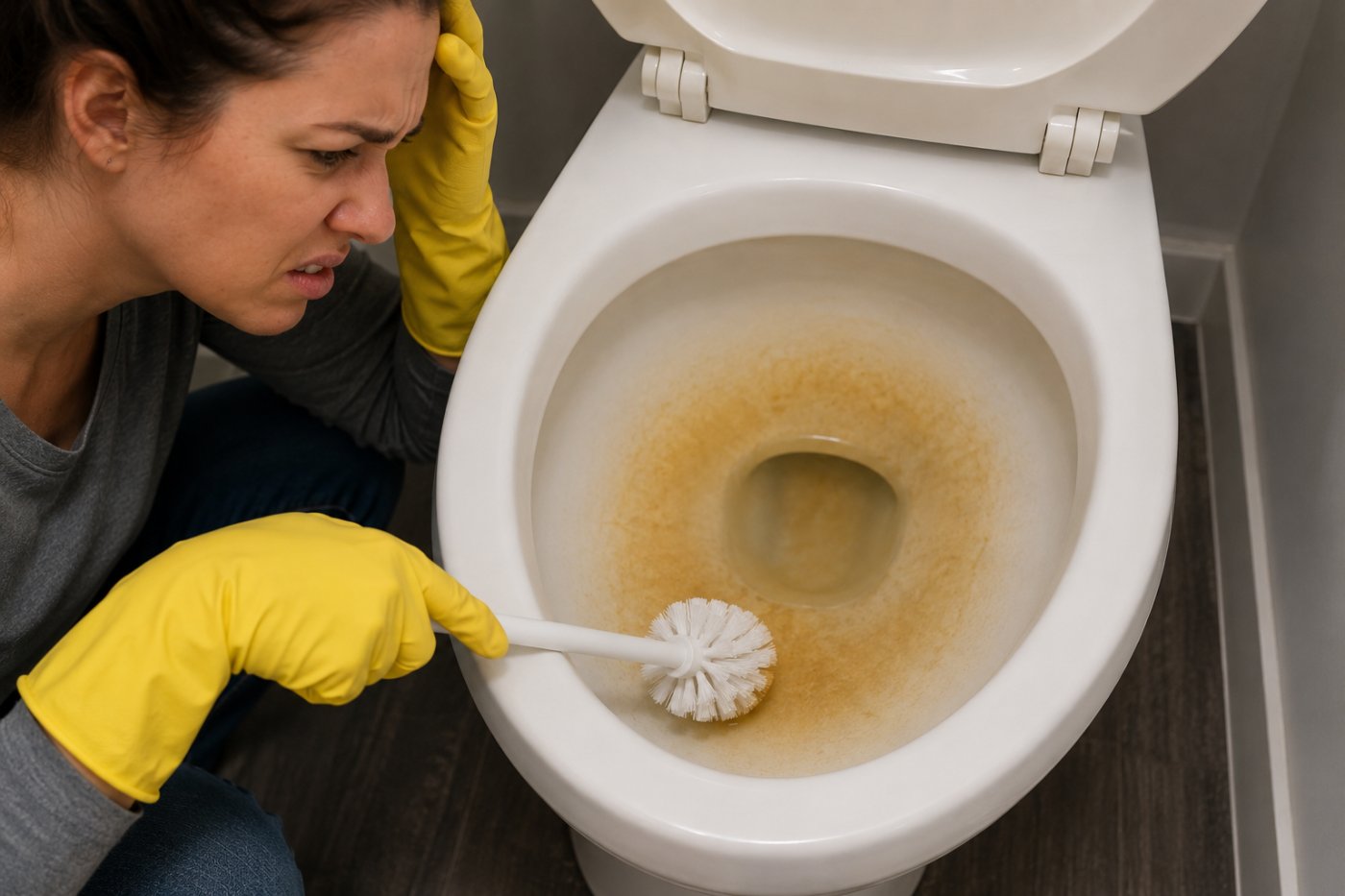
If you've noticed an orange or rust-colored stain building up inside your toilet bowl, around your sink drain, or on your tub — and no amount of scrubbing seems to get rid of it permanently — you're dealing with iron in your water. It's one of the most common well water problems in Florida, and it's also one of the most frustrating because the staining seems to come back almost as fast as you clean it.
Here's what's actually happening and what you can do about it.
It's Not Dirt — It's Iron
That orange, rust-colored staining isn't coming from outside your home. It's coming from your water. Florida well water frequently contains dissolved iron that gets pulled into the groundwater as it passes through iron-rich soil and rock formations underground.
When that iron-laden water flows into your toilet tank and bowl, it gets exposed to oxygen and oxidizes — the same process that causes metal to rust. The result is that reddish-orange deposit that stains porcelain, fiberglass, grout, and just about any other surface it regularly contacts.
The higher the iron concentration in your water, the faster and darker the staining. Some Florida homeowners deal with light orange tinting that builds up over weeks. Others have water with such high iron content that staining becomes visible within days of cleaning.
Why Toilets Get It the Worst
Your toilet is constantly in contact with your well water. Every flush brings a fresh supply of iron-rich water into the bowl and tank. Unlike a faucet that runs for a few minutes, your toilet tank sits full of water around the clock — giving iron plenty of time to oxidize and settle onto surfaces.
The tank itself is often where the worst buildup happens, even though it's out of sight. If you lift the lid on your toilet tank and see orange, brown, or rust-colored buildup on the inside walls and components, that's iron deposits. Over time that buildup can affect the flushing mechanism, cause parts to corrode, and shorten the life of your toilet's internal components.
It's Not Just Your Toilets
Once you know what iron staining looks like, you'll start noticing it everywhere iron-rich water touches:
- Sinks and drains — orange ring around the drain, rust streaks down the basin
- Bathtubs and showers — orange or brown staining along the waterline and around fixtures
- Laundry — orange or rust-colored stains on light-colored clothing and linens, especially around collars and cuffs
- Dishwasher — orange film inside the dishwasher tub and on dishes
- Irrigation systems — orange staining on driveways, sidewalks, and the sides of your home where sprinklers hit
- Hair — in cases of very high iron, some people notice their light-colored or blonde hair taking on an orange tint
If your driveway or the side of your house has rust-colored streaks from your sprinkler system, that's iron in your well water making itself visible outside too.
Two Types of Iron — and Why It Matters
Not all iron in water behaves the same way, and understanding the difference matters when it comes to choosing the right treatment.
Ferrous iron (dissolved iron) is iron that's fully dissolved in the water — you can't see it when the water comes out of the tap. It looks clear. But when it's exposed to air and oxidizes, it turns that familiar orange-brown color. This is the most common type in Florida well water.
Ferric iron (particulate iron) is iron that has already oxidized and is suspended as particles in the water. If your water comes out of the tap looking orange or cloudy, you're likely dealing with ferric iron as well.
Some well water contains both types. A water test will tell you exactly what you're dealing with and at what concentration — which is critical information for selecting the right treatment system.
Why Cleaning Products Only Help Temporarily
You've probably tried iron-removing toilet bowl cleaners, rust removers, or CLR-type products. They work — temporarily. They dissolve the iron deposits that have already formed, which gets your toilet looking clean again. But within days or weeks, the staining is back because you're still putting the same iron-rich water into the bowl with every flush.
Cleaning products treat the symptom. They do nothing about the source. As long as untreated iron-rich water is flowing into your home, the staining cycle never ends.
How Iron Gets Removed From Well Water
The right treatment depends on the type of iron, the concentration, and what other contaminants are present in your water. This is another reason a water test is the essential first step.
Iron filters / oxidizing filters. These are among the most effective solutions for dissolved iron. They work by oxidizing the iron inside the filter media, converting it from dissolved ferrous iron into particles that can be filtered out before the water reaches your home. Systems like air injection oxidation filters are popular for Florida well water with moderate to high iron levels.
Water softeners. A standard water softener can remove low to moderate levels of ferrous iron through the ion exchange process — the same process it uses to remove calcium and magnesium. However, water softeners have limits on how much iron they can handle, and using one as the sole treatment for high iron levels can damage the resin bed over time. For higher iron concentrations, a dedicated iron filter before the softener is the better approach.
Sediment filters. If ferric iron (particulate iron) is present, a sediment pre-filter can capture those particles before they reach the rest of your system. Sediment filters are often used as the first stage in a multi-treatment setup.
Chlorine injection. For very high iron levels or cases where iron bacteria are also present, chlorine injection followed by filtration and carbon treatment is sometimes the most effective approach.
Iron Bacteria — A Different Problem
It's worth mentioning iron bacteria separately because they're a common issue in Florida wells and they're often confused with simple iron staining.
Iron bacteria are microorganisms that feed on iron in your water. They produce a slimy, reddish-brown buildup that can clog pipes, coat the inside of your toilet tank, and give your water a musty or swampy odor. If the buildup in your toilet tank looks slimy or gelatinous rather than just crusty and mineral-like, iron bacteria may be involved.
Iron bacteria require a different treatment approach — typically shock chlorination of the well followed by an ongoing disinfection strategy. A water test that includes bacteria testing will reveal whether this is a factor in your situation.
What Life Looks Like Without Iron in Your Water
When iron is properly removed from your well water before it enters your home, the difference is significant and immediate:
- No more orange staining on toilets, sinks, tubs, or fixtures
- Laundry stays bright — no more rust stains on clothing or linens
- Dishes and glassware come out clean without orange film
- Your irrigation system stops staining your driveway and home exterior
- Your plumbing and appliances last longer without iron buildup and corrosion working against them
The cleaning products you've been buying to fight iron stains become unnecessary. Your fixtures stay cleaner with normal cleaning routines. And you stop replacing toilet components and fixtures ahead of schedule.
The Bottom Line
Orange toilet stains are one of the most visible signs of iron in your Florida well water — but they're just the surface of a problem that's affecting your entire home. Iron is staining your laundry, coating your appliances, damaging your plumbing, and making daily cleaning a constant uphill battle.
The fix isn't a better toilet bowl cleaner. It's treating the water before it ever reaches your fixtures.
A proper water test will tell you exactly how much iron is in your water, what type it is, and what treatment approach will eliminate it. Once the iron is out of your water, the staining stops — and stays stopped.
Dealing with orange stains and iron in your Florida well water? Dependable Water Treatment tests your water and installs the right iron removal system for your home. Contact us to schedule a water test and find out what's really in your water.