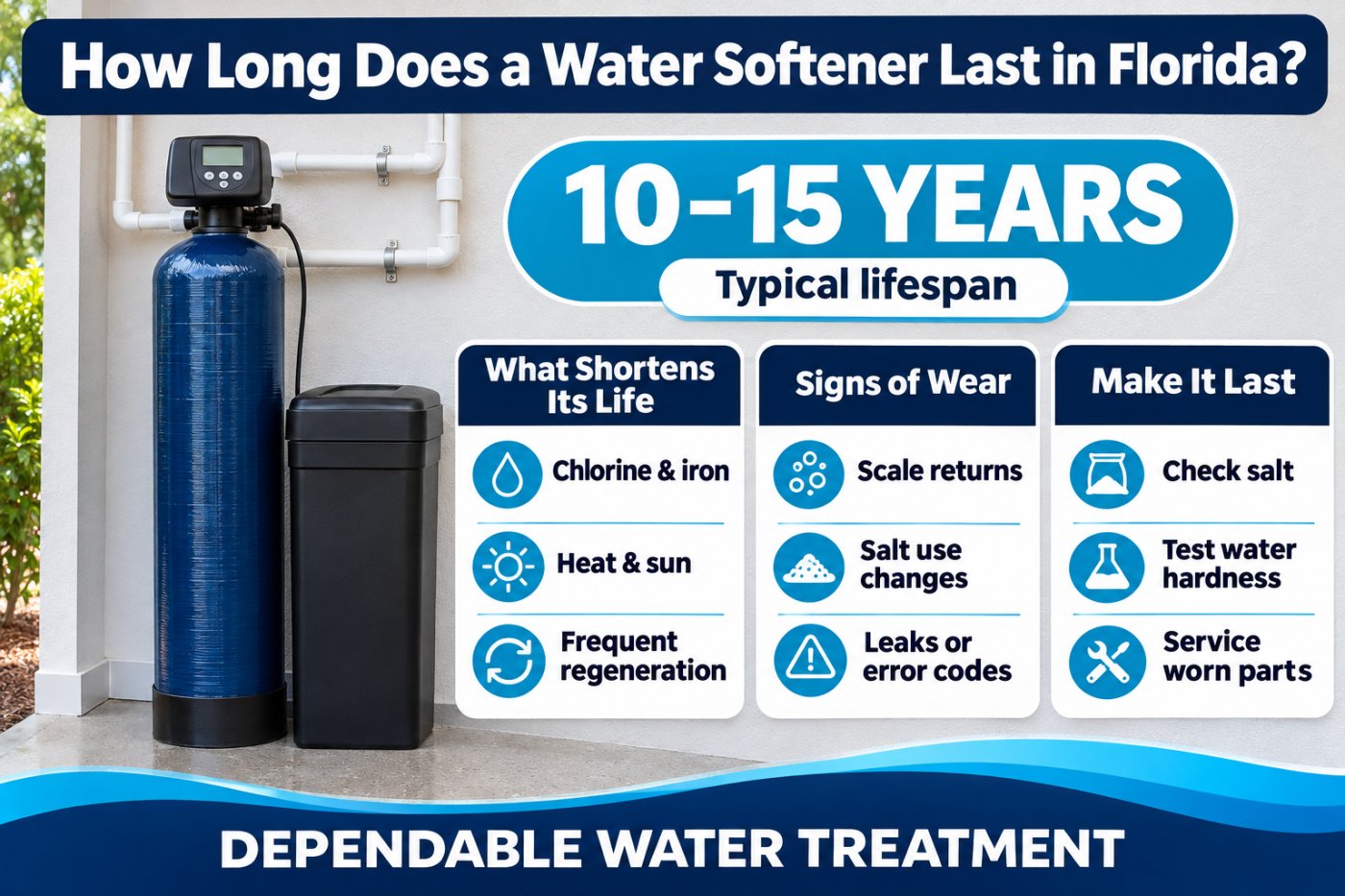
Short answer: a well-maintained water softener typically lasts about 10 to 15 years, and some last longer. In Florida, hard water, heat, chlorine and iron can shorten that lifespan, while regular maintenance can extend it. The parts that wear out first are usually the resin, the seals and the control valve, and in most cases they can be repaired or replaced without buying a whole new system.
Those numbers are general ranges and not guarantees. A softener in a shaded garage treating water with less hardness and iron is likely to outlast one baking in the sun on iron-heavy well water. Knowing what wears a softener down and how to spot the early signs helps you decide when to repair it and when to replace it.
What Affects How Long a Softener Lasts in Florida
Florida can be hard on water treatment equipment for a few reasons. The harder the incoming water, the more often a softener may need to regenerate. More frequent regeneration means more wear on the valve and seals over the years. Homes on private wells often have iron, which can coat the resin and cut its capacity. City water may contain chlorine or chloramines, which can gradually break down resin beads. We explain how upstream carbon filtration can help in our article on why some Florida homes need both a softener and a carbon filter.
Heat matters too. Florida garages and outdoor installations can get very hot, and prolonged exposure to sun and heat can make plastic parts brittle. Power surges and lightning can damage the electronic controller suddenly. Salt quality and how often the brine tank is cleaned also affect how well the system regenerates. Over time, these conditions and maintenance habits can make a difference of years.
Which Parts Wear Out First
| Part | What it does | Common problems and wear factors |
|---|---|---|
| Resin beads | Trade hardness minerals for sodium or potassium | Chlorine, chloramines and untreated iron |
| Control valve | Directs water through each stage of regeneration | Heavy use, sediment and worn seals |
| Seals and O-rings | Keep water flowing the right way inside the valve | Age, hard water scale and debris |
| Brine tank | Holds the salt and makes the brine used to regenerate the resin | Salt bridges, mushy salt buildup and poor salt quality |
| Controller and sensors | Track water use and time regeneration | Heat, moisture and power surges |
Worn or fouled resin is a common reason a softener stops softening. How long the resin lasts depends heavily on what is in your water, and we explain the details in our article on how long water treatment systems last.
Signs Your Softener Is Wearing Out
Softeners often give warning before they quit. One common sign is hard water coming back: spots on glass, scale on faucets, a soap film in the shower, or stiff laundry. Other signs include using noticeably more or less salt than before, a softener that regenerates at odd times or constantly, error codes, leaks around the valve or tank, unusual noises during regeneration, and tiny tan or brown resin beads showing up in sinks or faucet screens.
Before assuming the whole system is finished, rule out the simple problems. A salt bridge, an empty brine tank, a valve left in bypass, or settings that reset after a power outage can all mimic a failing softener. Comparing a hardness test at a tap served by the softener with a test of the incoming water tells you whether the softener is actually working. Our article on what a professional water test measures explains what a thorough test covers.
Repair or Replace?
Because the softener is made of separate parts, many problems can be fixed without replacing everything. Worn seals, a faulty controller, a damaged valve, or tired resin can often be repaired or replaced individually, and a softener with a sound tank can keep going for years after that. Replacement tends to make more sense when the tank itself is cracked or leaking, when the system has needed repeated repairs, or when the equipment no longer fits your household or your water. That can happen after a family grows or when a water test reveals a problem the old system was never set up to handle.
If you are weighing it, the most useful information is what is actually failing and why. A technician can usually tell you quickly, and a water test can help identify problems upstream. Our article on how to determine what water treatment your home needs walks through how that decision gets made.
How to Get More Years From Your Softener
- Keep salt in the brine tank and use the type your manufacturer recommends. Check it regularly for a hard crust called a salt bridge.
- Clean the brine tank as needed to remove sludge and buildup.
- Protect the resin. If you have iron, chlorine or chloramines in the water, upstream treatment matched to the problem can extend resin life.
- Test your water periodically. Hardness and iron can change, and the settings should match the water the softener treats.
- Keep it out of direct sun and extreme heat if you can, and consider surge protection for the controller.
- Have it checked periodically so small problems get fixed before they become big ones.
Wondering whether your softener has years left or is on its way out? We can test your water and check your system. Call Dependable Water Treatment at 407-242-7150 or contact us online to schedule a water test.