You fill a glass at the kitchen sink and the water comes out looking like a freshly poured soda, fizzy and cloudy with a layer of foam on top. A minute earlier everything seemed fine, and now your first thought is that something has gone wrong with the well. Sometimes that instinct turns out to be right, but far more often the explanation is a lot less dramatic. The trick is knowing which situation you are in, and the good news is that you can answer most of that question yourself in about five minutes with a clear glass and a little patience.
Start With the Glass Test
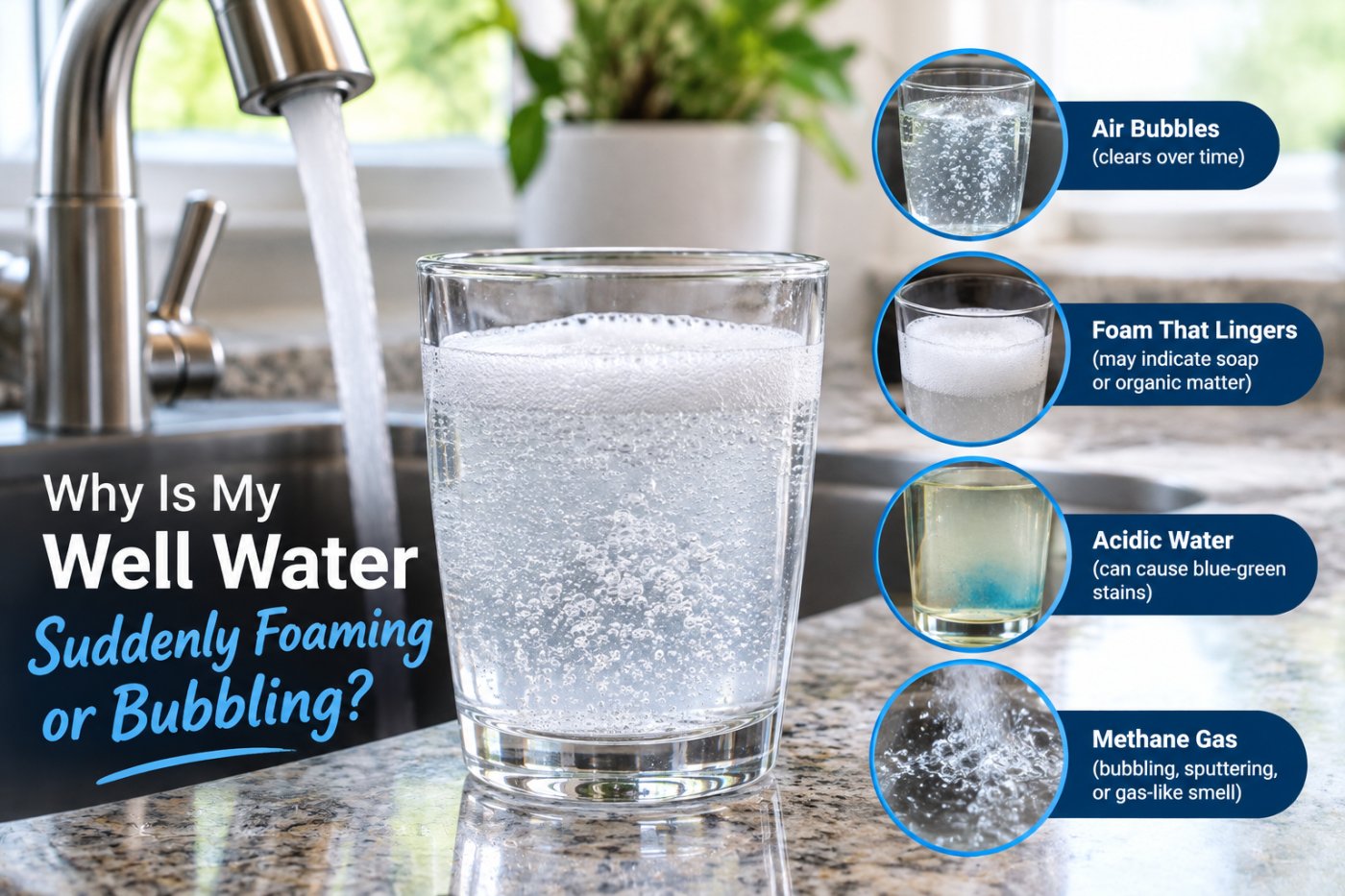
The most common reason for fizzy, bubbly well water is simply air. Air gets into a well system more easily than most people expect. It can slip in after a power outage, after any plumbing or equipment work, or just when the pressure in your lines shifts and tiny bubbles come out of solution as the water reaches the open air of your faucet. The water looks milky or hazy at first, then settles down.
To tell whether air is your culprit, fill a clear glass, set it on the counter, and watch it. If the bubbles rise and the water clears from the bottom up within a few minutes, you are almost certainly looking at trapped air, and there is nothing to treat. We walk through this same test in our article on cloudy well water and when to call a professional, because cloudiness and fizziness usually have the same simple explanation.
Groundwater can also carry dissolved carbon dioxide, which behaves much the same way. When the water leaves the pressure of your plumbing and meets the open air, the gas escapes and the water fizzes lightly. The gas itself is harmless, but a lot of dissolved carbon dioxide tends to make water more acidic, and acidic water is hard on copper pipes over time. If your bubbly water also comes with blue-green stains in your sinks or tubs, a pH test is worth doing to rule that out.
When the Foam Does Not Fade
Air bubbles disappear. Foam that sticks around is a different story, and it is the symptom that deserves a closer look. If you see a layer of suds sitting on top of a still glass of water for more than a minute or two, or if the water has a slick, soapy feel or taste to it, the cause is probably not air.
Before you worry, rule out the simplest explanation, which is the glass itself. A trace of leftover dish soap can produce foam that looks exactly like a water problem, so try a fresh, thoroughly rinsed glass. If clean glassware still produces lasting foam, the water is carrying something that lowers its surface tension, the same property that lets soap make suds.
One possibility is dissolved organic matter or a very high mineral load, which can make water foam more readily when it is agitated, such as when it splashes into a sink. That is more of a nuisance than a hazard, and it often shows up alongside a high total dissolved solids reading, which we explain in our article on what TDS means for Florida homeowners.
The possibility to take seriously is detergent in the groundwater. In a home on a septic system, household wastewater is full of soaps and detergents, and if the drain field is too close to the well or the well is not properly sealed, some of that can work its way into the water your well draws. Lasting foam may be the only visible clue. What makes this worth acting on is not the soap itself, but what travels with it. Wastewater contamination brings bacteria and nitrates, neither of which you can see, smell, or taste. That is exactly why we recommend a test right away in this situation, and why our article on your first bacteria test as a well water homeowner applies to any sudden change like this one.
The Rare Case Worth Taking Seriously
There is one more explanation, and it is uncommon in most of Florida, but you should know about it. Groundwater can occasionally carry dissolved gas such as methane, which makes water bubble, hiss, or sputter at the tap, and sometimes brings a gas-like smell with it. Because methane is flammable, this is a safety matter rather than a water quality inconvenience.
If your water is persistently bubbling or sputtering and you notice an odor like natural gas, keep open flames and sparks away from the area and open windows to ventilate. If the smell is strong, leave the house and call emergency services or your gas utility from outside. Once the situation is safe, the water and the well should be evaluated before anyone resumes normal use.
What to Do Next
For most homeowners, the glass test settles the question in a few minutes, and bubbly water that clears from the bottom up is nothing more than air working its way out. Foam that lingers, a soapy taste or feel, a gas-like smell, or bubbling that shows up alongside any other change in your water are all signs to stop guessing and get a real answer. A comprehensive water test covers the bacteria, nitrates, and mineral content that no amount of looking at a glass can tell you, and it turns a worrying symptom into a clear next step.
If your well water is foaming or bubbling and you are not sure why, let us take a look. Call Dependable Water Treatment at 407-242-7150 or contact us online to schedule a water test.