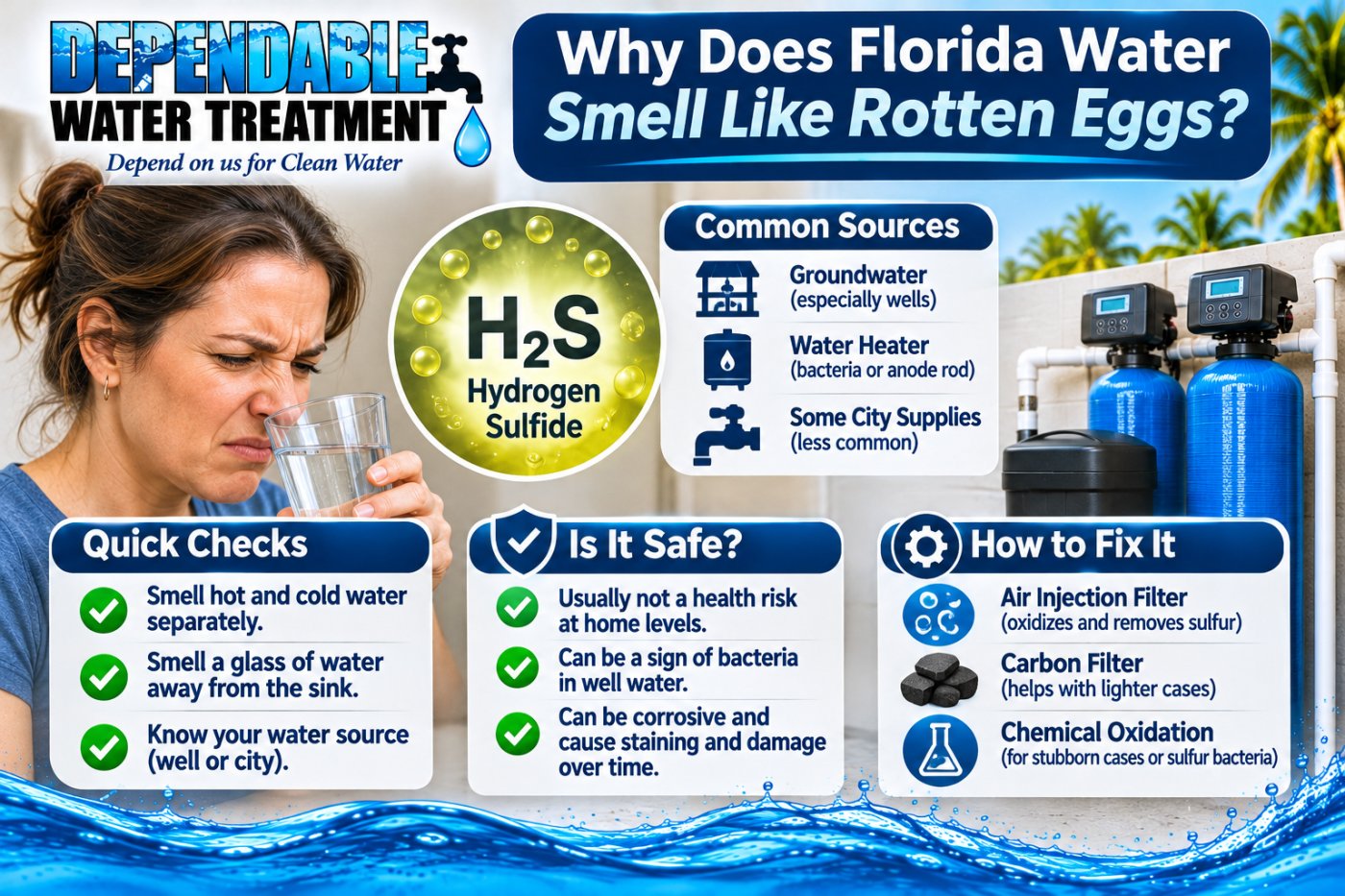
Short answer: the rotten egg smell in Florida water is almost always hydrogen sulfide, a gas that forms naturally underground and dissolves into groundwater. It can also come from bacteria growing in a water heater. At the levels found in most homes it is more unpleasant than dangerous, and it can be fixed once you know where it is coming from.
If you have just moved to Florida and your tap water smells like a boiled egg, you are in good company. It is one of the most common complaints in the state, and it shows up in private wells, in some city supplies, and in plenty of hot water tanks. The first step is figuring out which of those three you are dealing with, because the fix is different for each.
Where the Smell Comes From
Hydrogen sulfide forms when certain bacteria break down organic material in places with little oxygen, such as deep groundwater and the sandy, plant-rich soils common across Florida. The Florida Department of Health notes that hydrogen sulfide can occur in wells anywhere in Florida and gives water the characteristic rotten egg smell. People can detect it at very low concentrations, which is why even a small amount is noticeable.
That limestone-rich geology is also what makes Florida water so hard. The same aquifer that delivers calcium and magnesium can deliver sulfur compounds, so it is common for a home to have both hard water and a sulfur smell at the same time.
Is It Your Well, Your City Water, or Your Water Heater?
A few quick checks can narrow it down before you call anyone.
Smell the cold water and the hot water separately. If only the hot water smells like eggs and the cold is fine, the water heater is the likely source. Bacteria can grow inside a tank, especially at lower temperatures or when a heater has been turned off or unused for a while. A magnesium anode rod inside the tank can also react with sulfur compounds in the water and make the smell much stronger. If both the hot and cold water smell, the sulfur is coming in with your water supply.
Smell a glass of water away from the sink. Fill a glass, carry it to another room, and smell it. If the glass smells fine but the area around the drain does not, the odor may be coming from the drain and not from the water. Drains can develop smelly buildup that has nothing to do with your water quality.
Consider your water source. Homes on a private well are the most likely to have hydrogen sulfide in the water itself. City water is treated before it reaches you, so a smell there is more often from the water heater, the drains, or occasionally a change in the supply. If the smell showed up suddenly on city water, it can help to check with your utility.
Is It Safe to Drink?
At the levels typically found in household water, hydrogen sulfide is not considered a significant health risk. The bigger concern is what the smell might indicate. On a private well, sulfur bacteria and other bacteria often occur together, so a smell is a good reason to run a full water test, including a bacteria check. Hydrogen sulfide is also corrosive, and over time it can tarnish silverware, stain fixtures, and damage plumbing. We explain what a thorough test covers in our article on what a professional water test measures.
How the Smell Gets Fixed
The right fix depends on the source and the amount. If it is only the hot water, replacing a magnesium anode rod with a different type, or cleaning and adjusting the heater, can solve it without any treatment equipment. If the sulfur is in the water supply, the common solutions are an air injection filter that oxidizes the gas so it can be filtered out, a carbon filter for lighter cases, or chemical oxidation for stubborn ones, especially when sulfur bacteria are present. Sulfur often appears alongside iron, hardness, and other issues, and the order of the equipment matters, as we describe in our article on why some Florida homes need both a softener and a carbon filter.
The dependable way to choose is to test first and match the equipment to your results. Our article on how to determine what water treatment your home needs walks through that process.
Smelling rotten eggs from your tap? We can test your water and tell you where the smell is coming from. Call Dependable Water Treatment at 407-242-7150 or contact us online to schedule a water test.