A well system that suddenly delivers weak pressure, or pressure that surges and drops unpredictably, is one of the more unsettling problems a well owner can face. Unlike a gradual decline that develops over months, a sudden change usually points to a specific mechanical event rather than slow scale buildup, which narrows down what is likely happening fairly quickly.
Start With the Pressure Tank
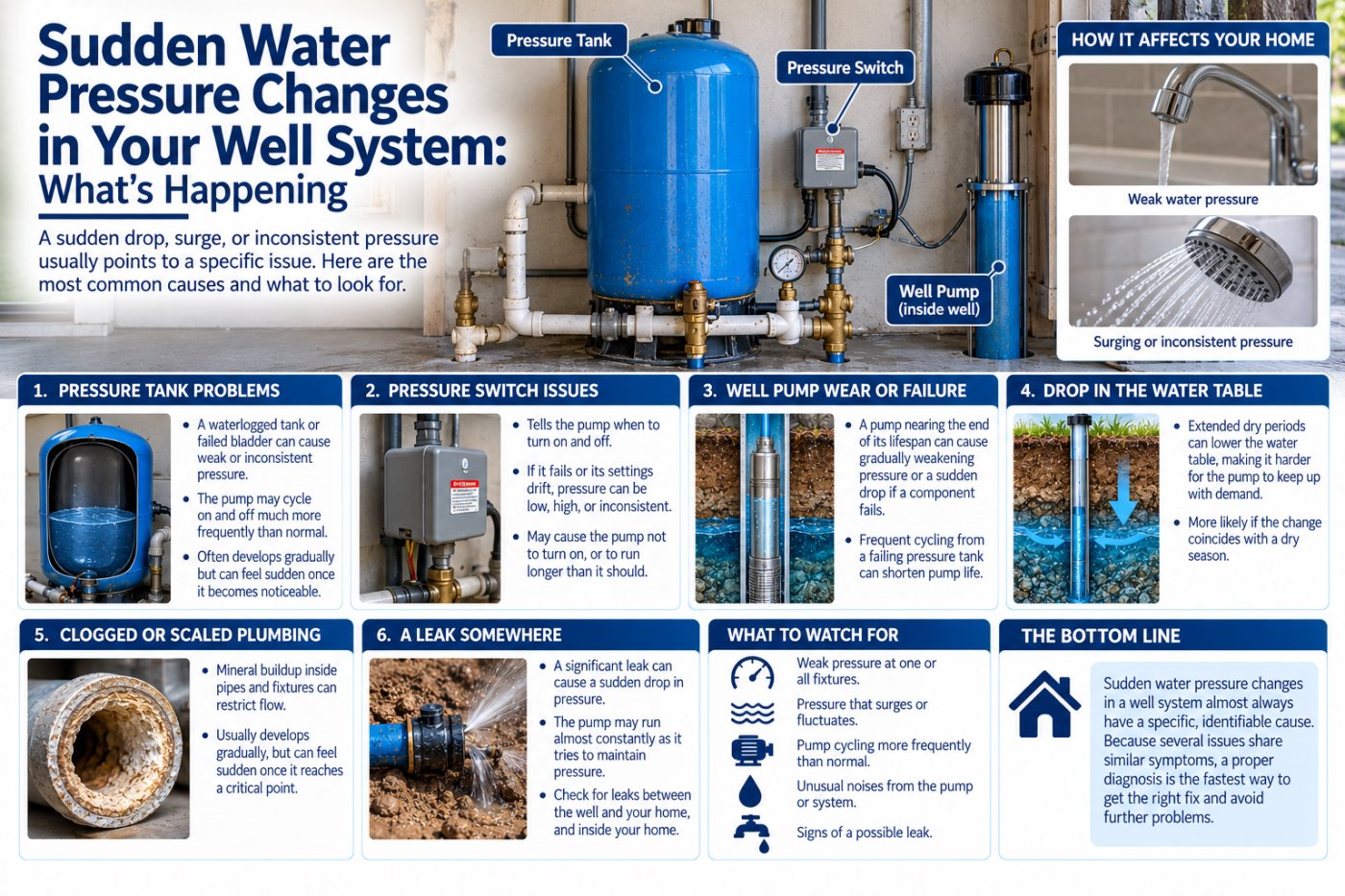
As covered in our article on why well water pressure tanks fail, a waterlogged pressure tank is one of the most common causes of sudden pressure problems. When the tank loses its air charge, either from a slow leak or a failed bladder, your well pump starts cycling on and off far more frequently than it should, and pressure becomes noticeably less steady between cycles. This often develops gradually but can feel sudden once it crosses a threshold where you finally notice it.
The Pressure Switch
Your well system's pressure switch tells the pump when to turn on and off based on pressure readings in the tank. If this switch fails or its settings drift, you can experience sudden pressure changes that have nothing to do with the tank itself. A failing pressure switch often produces symptoms that feel electrical or intermittent, such as the pump not turning on at all until you cycle a breaker, or turning on and staying on longer than it should.
Well Pump Wear or Failure
A well pump nearing the end of its lifespan can produce gradually weakening pressure that eventually feels sudden once it crosses a noticeable threshold, or in some cases a more abrupt drop if a component fails outright. Pumps typically last many years, but Florida's demanding water conditions and the added strain of frequent cycling from a failing pressure tank can shorten that lifespan meaningfully.
A Sudden Drop in the Water Table
During extended dry periods, or in wells that are already marginal in depth, a drop in the surrounding water table can cause your pump to struggle to keep up with demand, producing weak or inconsistent pressure that was not a problem during wetter conditions. This is more likely if the change coincides with an extended dry stretch rather than appearing suddenly with no clear seasonal pattern.
Clogged Or Scaled Plumbing
While this typically produces a more gradual decline, significant scale buildup that finally restricts flow past a critical point can feel like a sudden loss of pressure once it happens. As covered in our article on why your water pressure may be dropping over time, mineral buildup inside pipes and fixtures narrows the space water has to flow through, and the effect can become noticeable all at once even though the underlying cause developed slowly.
A Leak Somewhere in the System
A sudden, significant drop in pressure combined with the well pump running almost constantly can indicate a leak somewhere between the well and your home, or within your home's plumbing itself. This is worth ruling out with the water meter check covered in our article on how to locate and read your water meter in Florida, adapted for well systems by checking whether your pump cycles on even when no fixtures are in use.
Why Guessing Is Risky Here
Several of these causes look nearly identical from the homeowner's perspective, weak or inconsistent pressure, but they require completely different fixes. A waterlogged tank needs an air recharge or bladder replacement. A failing pump needs professional diagnosis and likely replacement. A leak needs to be located and repaired before it causes further damage or drives up costs. Attempting to fix the wrong problem wastes time and can allow the actual issue to worsen.
The Bottom Line
Sudden pressure changes in a well system almost always trace back to a specific, identifiable cause, whether mechanical, electrical, or related to the water table itself. Because several possible causes share similar symptoms, a proper diagnosis is the fastest path to an actual fix rather than a guess that may or may not solve the problem.
If your well water pressure has changed suddenly, do not wait for it to get worse. Call Dependable Water Treatment at 407-242-7150 or contact us online to schedule a diagnostic visit.