Your water meter is one of the most useful tools available to a new homeowner. It helps you understand your household's water use, catch leaks early, and get a general sense of your daily water consumption. Yet most people never look at it after moving in. Learning to find and read yours takes just a few minutes and pays off in ways you might not expect.
Finding Your Water Meter
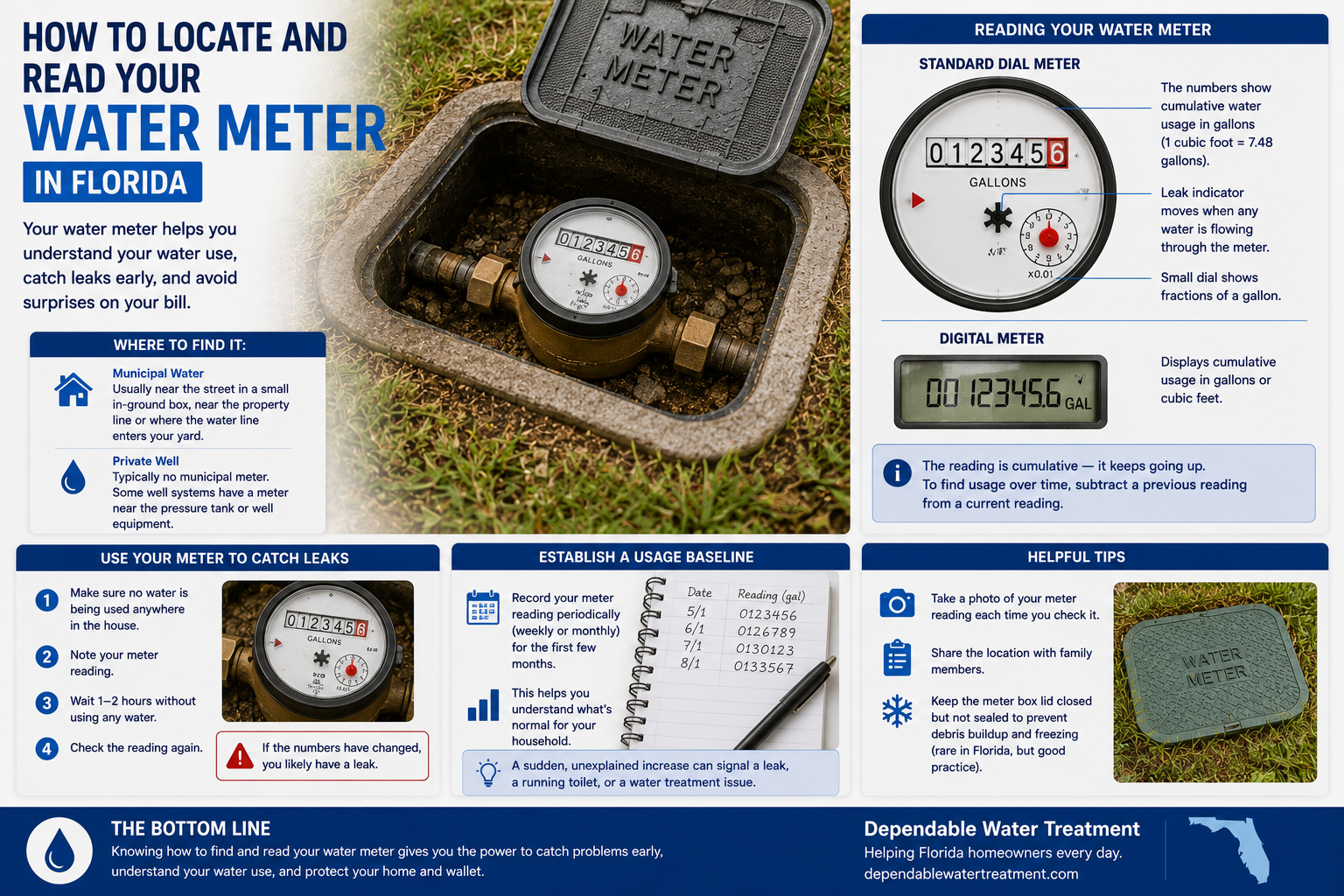
For homes on municipal water in Florida, the meter is typically located near the street. It's usually housed in a small in-ground box with a metal or plastic lid, often near the property line or close to where the water line enters your yard. It may be marked with your utility's name or a generic "water meter" label on the lid.
For homes on private wells, there is generally no municipal meter. However, some well systems include a meter near the pressure tank or well equipment specifically to track the household's own usage. This is particularly useful for monitoring well pump performance and sizing water treatment equipment correctly.
How to Read a Standard Water Meter
Most municipal water meters display usage in gallons or cubic feet, shown on a dial or digital readout similar to an odometer. The numbers represent cumulative water usage since the meter was installed, not a daily or monthly figure by themselves. To determine your actual usage over a period, record the reading at two points in time and calculate the difference.
Many meters also include a small leak indicator, often a triangle, star, or spinning dial, that moves whenever any water flows through the meter, even in tiny amounts. If this indicator is moving while every fixture in your home is off, it's a strong sign of a leak somewhere in your system.
Using Your Water Meter to Catch Leaks Early
Shortly after moving in, try this simple leak check. Make sure no water is being used anywhere in the house. No running faucets, no dishwasher or washing machine cycles, no toilets mid flush. Note your meter reading, then wait one to two hours without using any water. Check the reading again. If it has changed, water is flowing somewhere in your system even though nothing should be actively using it. This indicates a leak worth investigating before it causes damage or drives up your bill.
Establishing a Water Usage Baseline
Recording your meter reading periodically during your first few months, even just once a month, helps you establish a baseline for normal household usage. This baseline becomes valuable later. A sudden, unexplained increase in usage is often the first sign of a developing leak, a running toilet, or a water softener regenerating far more often than it should. Catching this pattern early can reveal a system problem before any other symptom appears.
The Bottom Line
A few minutes spent locating and understanding your water meter gives you an ongoing tool for catching leaks early and understanding your household's water use patterns. This is valuable information for any new Florida homeowner, whether you're on municipal water or maintaining your own well system.
Dependable Water Treatment helps Florida homeowners understand every aspect of their home's water system. Contact us with any questions as you settle into your new home.