You've probably noticed the effects of Florida's hard water on your own skin, hair, and daily routine. But if you have a dog or cat at home, they're drinking the same water you are — every single day, often in larger relative volumes for their body size than you drink yourself. Understanding how hard water affects pets helps you make informed decisions about your household water and recognize symptoms that might otherwise go unexplained.
Is Hard Water Dangerous for Pets?
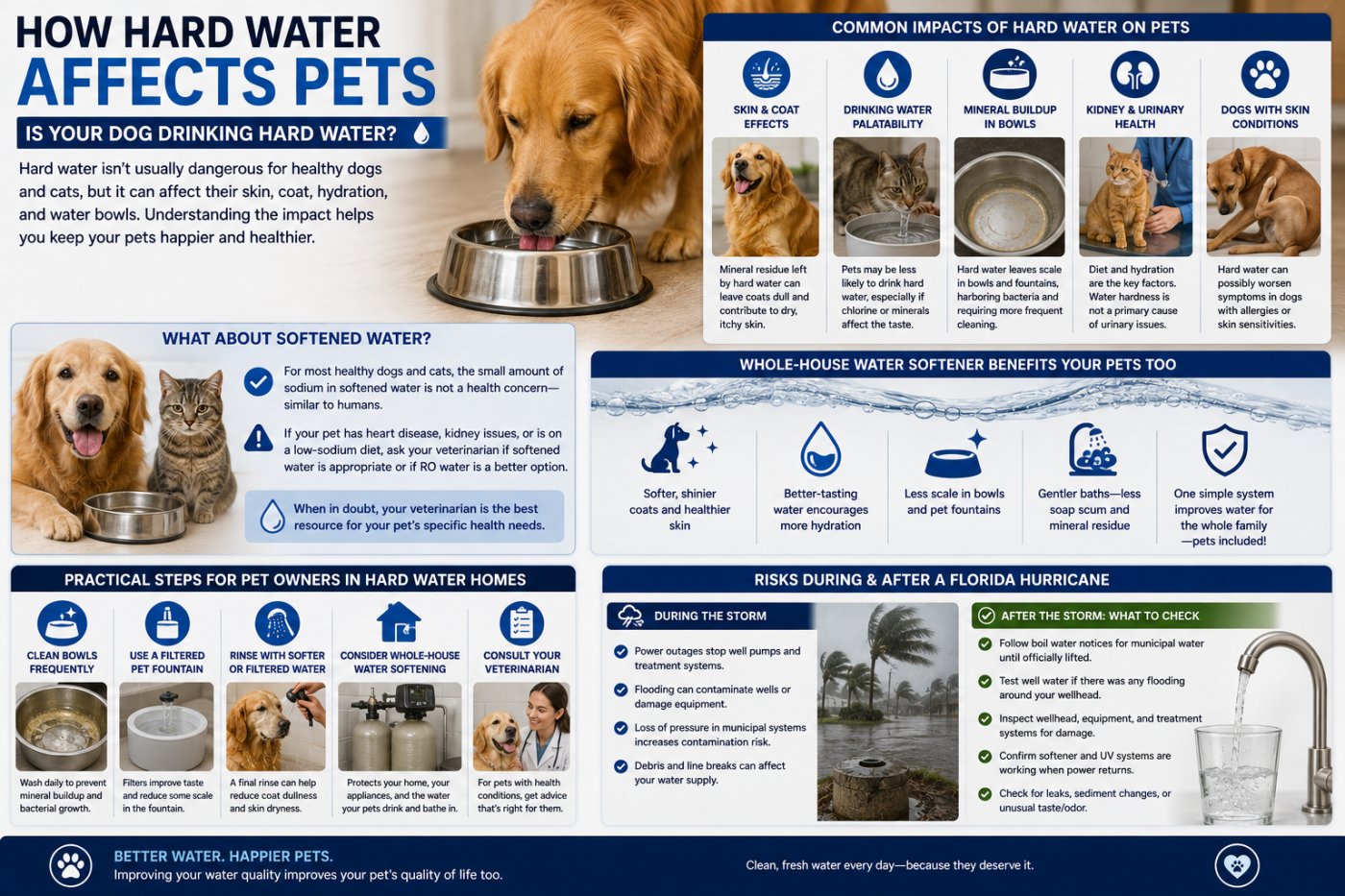
The direct answer, consistent with how hard water affects humans, is that hard water itself is generally not considered dangerous for healthy dogs and cats. Calcium and magnesium are minerals that appear naturally in many pet food formulations and are not toxic at the concentrations found in residential hard water. Most veterinarians don't consider ordinary hard water a primary health threat for otherwise healthy pets.
That said, "not dangerous" doesn't mean "without effect." Just as hard water creates a range of quality-of-life issues for humans without posing an acute danger, it can create similar quality-of-life effects for pets — and in certain situations, more specific concerns worth understanding.
Skin and Coat Effects
This is one of the most commonly reported effects among pet owners who've switched from hard to soft water, or who've noticed changes after moving to a harder water area like much of Florida.
Just as hard water can dry out human skin and hair by interfering with soap's ability to rinse away cleanly, bathing pets in hard water can leave mineral residue on their skin and in their coat. This residue can contribute to a dull, less soft coat texture and may exacerbate skin dryness or itchiness, particularly in dogs already prone to sensitive skin or conditions like allergies or dermatitis.
Pet owners in hard water areas sometimes notice their dog's coat feels coarser or looks less shiny than it did in a previous, softer-water location, or than what they see in professionally groomed dogs bathed with treated water. This mirrors the same soap scum and mineral residue mechanism covered in our article on why Florida homes commonly have dry skin and hair from water — the chemistry doesn't distinguish between human and animal skin and fur.
Drinking Water Palatability
Dogs and cats have keen senses of smell and taste, often more sensitive to water quality differences than humans. Some pet owners report their pets drinking less water, or showing clear preference for filtered or bottled water over tap water, in homes with notably hard or mineral-heavy water — particularly if chlorine or chloramine taste and odor are also present.
Adequate water intake is important for pet health, particularly for cats, who are prone to urinary tract issues and kidney concerns that are directly linked to hydration levels. If your pet seems reluctant to drink from their water bowl, and you've ruled out other causes, water taste and quality — including hardness and chlorine/chloramine content — is worth considering as a contributing factor.
Mineral Buildup in Water Bowls
Hard water leaves the same type of scale and mineral deposits in pet water bowls that it leaves on faucets and fixtures throughout your home. This buildup, particularly in stainless steel or ceramic bowls, can create a rough surface that harbors bacteria more readily than a clean, smooth surface, and requires more frequent and more vigorous cleaning to keep bowls genuinely sanitary.
Automatic pet water fountains — increasingly popular for encouraging pets to drink more water — are especially prone to hard water scale accumulation in their pump mechanisms and filter components, since these systems continuously circulate water and are exposed to hard minerals repeatedly throughout the day. Scale buildup in these small mechanical components can cause pump failures and reduce the fountain's effective lifespan, similar to how hard water affects other small appliances throughout your home.
Kidney and Urinary Health Considerations
This is an area where pet owners — particularly cat owners — sometimes have specific concerns, and it's worth addressing directly and accurately.
Cats are prone to urinary crystals and stones, and diet is the primary factor veterinarians focus on when managing this risk — specifically the mineral content of food and the cat's overall hydration and urinary pH. The calcium and magnesium in ordinary tap water, hard or soft, is not considered a primary driver of urinary crystal formation in cats according to standard veterinary guidance; commercial cat food formulation and hydration levels are the dominant factors.
That said, if your veterinarian has specifically recommended managing your cat's mineral intake due to a diagnosed condition, this is a conversation to have directly with them regarding your specific water source, since individual medical circumstances vary and a treating veterinarian familiar with your pet's specific condition is the appropriate resource for that guidance — not a general assumption based on water hardness alone.
Dogs With Skin Conditions
For dogs already diagnosed with skin conditions such as allergic dermatitis, atopic dermatitis, or other chronic skin sensitivities, hard water bathing can be one of several environmental factors that veterinary dermatologists sometimes discuss as potentially exacerbating symptoms, alongside more significant factors like diet, environmental allergens, and parasites.
If your dog has a diagnosed skin condition, this is worth mentioning to your veterinarian as part of the broader conversation about environmental management, though it's typically considered a minor contributing factor rather than a primary cause requiring dedicated treatment on its own.
What Softened Water Means for Pets
If your home has a water softener, a natural question is whether softened water — which contains a small amount of added sodium in place of the removed calcium and magnesium — is appropriate for pets to drink.
For most healthy dogs and cats, the sodium level in typically softened water is not considered a significant health concern, similar to how it's not a significant concern for most healthy humans, as covered in our article on the myth that softened water is too salty to drink. Pets generally consume a smaller total volume of water than humans relative to typical sodium exposure guidelines, though exact comparisons depend on the pet's size and individual health status.
However, for pets with diagnosed heart conditions, kidney disease, or other conditions where a veterinarian has specifically recommended sodium restriction, the same caution that applies to humans on medically restricted sodium diets applies to pets — this is a conversation to have directly with your veterinarian, who can advise whether your specific softened water situation is appropriate or whether an alternative water source, such as water from an under-sink reverse osmosis system, would be more appropriate for that pet's specific medical needs.
Practical Steps for Pet Owners in Hard Water Homes
Clean water bowls frequently — more often than you might think necessary — to prevent mineral buildup and the bacterial growth it can encourage on rough, scaled surfaces.
Consider a pet-specific water fountain with a compatible filter if you're not addressing hardness at the whole-house level, which can improve both taste and reduce some scale buildup in the fountain itself, though it won't address bathing water.
If bathing your dog at home, consider a final rinse with filtered or softened water if you notice coat dullness or skin dryness that seems related to bathing, similar to how softened water benefits human hair and skin as covered in our article on how ion exchange water softening works.
If your household already has a whole-house water softener installed for the reasons covered throughout our Learning Center — protecting appliances, improving skin and hair, eliminating spotting and staining — your pets are simply benefiting from the same improved water quality as the rest of your household, without any additional effort required.
The Bottom Line
Hard water isn't a significant danger to most healthy pets, but it can contribute to the same quality-of-life effects it causes for humans — dry, dull coats, potential skin irritation, water bowls that need more frequent cleaning, and appliances like pet fountains that scale up and wear out faster than they should. For pets with specific diagnosed health conditions, particularly involving kidneys, urinary health, or sodium sensitivity, your veterinarian remains the right resource for guidance specific to your pet's situation.
If your household already benefits from treated water, your pets are along for the ride. If you haven't addressed your water quality yet, it's one more small but genuine benefit to add to the list.
Curious how your household's water quality might be affecting your pets alongside your family? Dependable Water Treatment helps Florida homeowners understand and improve their water for everyone in the house — two legs or four. Contact us to schedule a water test.