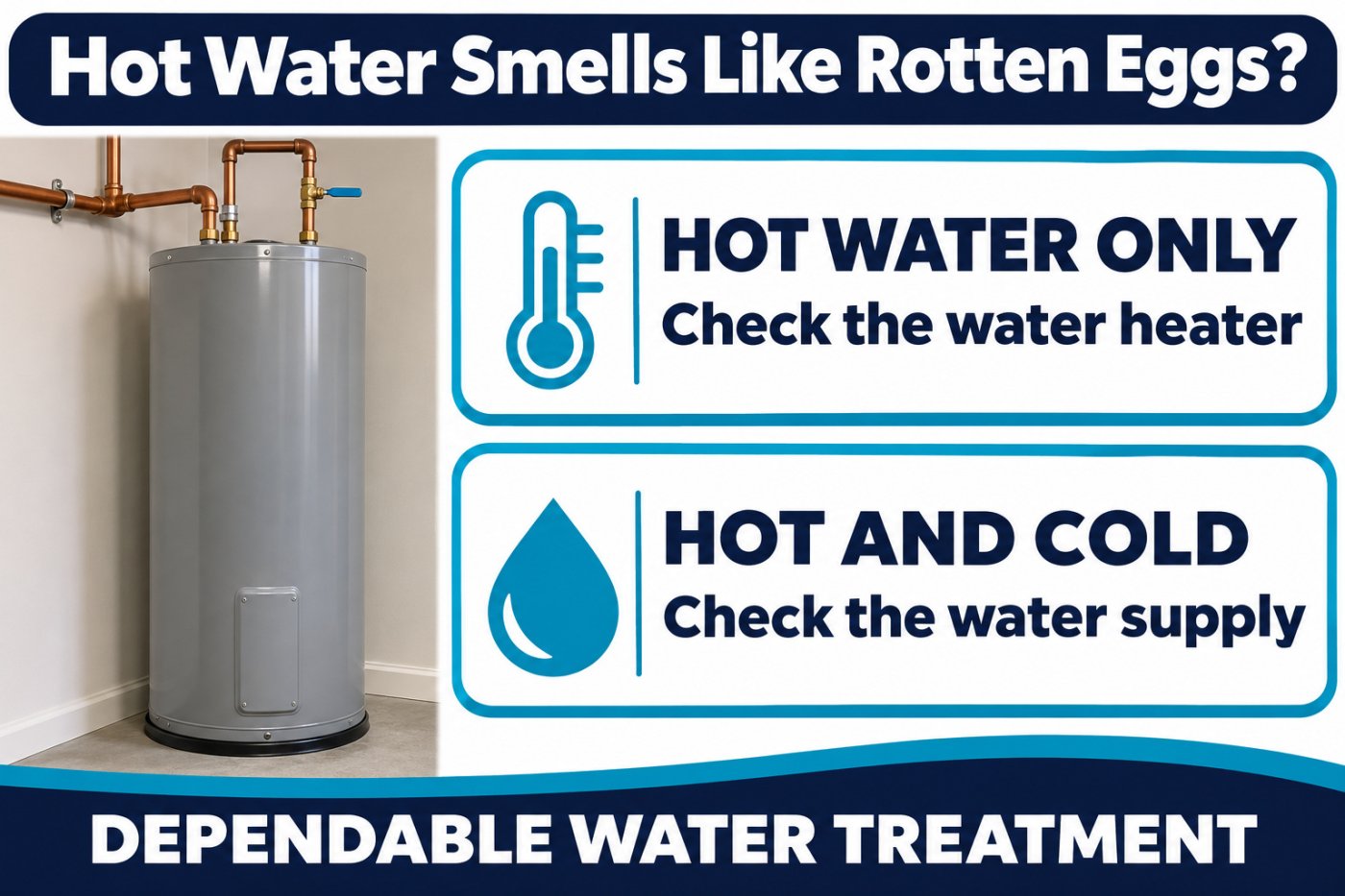
Short answer. When only the hot water smells like rotten eggs and the cold water is fine, the water heater is the likely source. Bacteria in the tank or a reaction involving the tank's magnesium anode rod can turn sulfate in the water into hydrogen sulfide gas. It is usually fixable, often without whole-house treatment equipment.
That rotten egg smell is a familiar water complaint in Florida, and the hot-only version trips up a lot of homeowners. They assume something is wrong with the water supply and start looking at filters, when the real culprit is sitting in the garage. Here is how to tell the difference and what to do about it.
Why the Hot Water Smells and the Cold Water Does Not
The smell comes from hydrogen sulfide, a gas that certain bacteria produce when they break down sulfate in low-oxygen conditions. A water heater tank can provide those conditions. Sulfate-reducing bacteria can grow inside the tank, especially when the water is kept at lower temperatures or the heater has been turned off or barely used for a while.
The second common cause is the anode rod. Most tank water heaters contain a metal rod, often made of magnesium, that is designed to corrode instead of the tank. It protects the tank from rusting, but magnesium can also help convert sulfate in the water into hydrogen sulfide. If the odor shows up after a new heater is installed, the magnesium rod is worth checking.
How to Tell It Is the Water Heater
A few quick checks can narrow it down. Compare hot and cold water at more than one tap. If only the hot water smells, the heater is the likely source. Then fill a glass with a little of the water that smells and step away from the sink before checking it. If the smell stays at the sink, the drain is the likely source. Finally, think about timing. If the smell started after a new heater was installed, after a vacation when the heater sat unused, or after the temperature was turned down, that points to the heater too.
If both the hot and cold water smell at several taps, check the incoming water, plumbing, and any existing treatment equipment. If you have a private well and the odor is new, ask a certified drinking-water lab about testing for coliform bacteria and nitrate. If you're on public water and the odor persists across several taps, contact your utility. We explain what a thorough test covers in our article on what a professional water test measures.
How the Smell Gets Fixed
One common fix is changing the anode rod. A licensed plumber can check whether your model accepts an aluminum or aluminum-zinc alloy rod, or a powered anode. A compatible replacement can reduce the odor while still protecting the tank. If bacteria are causing the odor, the plumber may recommend disinfecting and flushing the heater. Flushing can also clear built-up sediment.
You may also hear that raising the water heater temperature can kill the bacteria. Higher temperatures create a serious scald risk, especially for children and older adults. Leave any heat treatment and work on gas or electric heaters to a licensed professional. Check the manufacturer's warranty before changing the anode rod. Removing it without a compatible replacement can shorten the life of the tank.
When the Smell Is in the Water Supply
If testing confirms hydrogen sulfide in the incoming water, match the treatment to the level and the rest of your water chemistry. Common options include activated carbon for low levels, air injection with filtration where the water chemistry allows it, and chemical oxidation with filtration for higher levels. If sulfur bacteria are growing in the well or plumbing, a professional may recommend disinfection. If testing also finds iron or hardness, the order of the equipment matters, which we cover in our article on why some Florida homes need both a softener and a carbon filter. For a step-by-step look at how the right system gets chosen, see our article on how to determine what water treatment your home needs.
Hot water that smells like rotten eggs? We can test your water and tell you whether it is the heater or the water supply. Call Dependable Water Treatment at 407-242-7150 or contact us online to schedule a water test.