If your clothes come out of the wash feeling more like cardboard than cotton, you're not alone — and it's not your detergent's fault. If you live in Florida, hard water is almost certainly the culprit. Understanding what's happening inside your washing machine can save your clothes, your appliances, and a lot of frustration.
What Is Hard Water, and Why Does It End Up in Your Laundry?
Hard water is water that contains high levels of dissolved minerals — mainly calcium and magnesium. In Florida, these minerals are everywhere because our groundwater passes through limestone and other mineral-rich rock formations before it ever reaches your tap.
When that hard water flows into your washing machine, those minerals go along for the ride. And once they're in the wash cycle with your clothes, they start causing problems you can feel the moment you pull your laundry out of the dryer.
Here's What Actually Happens to Your Clothes
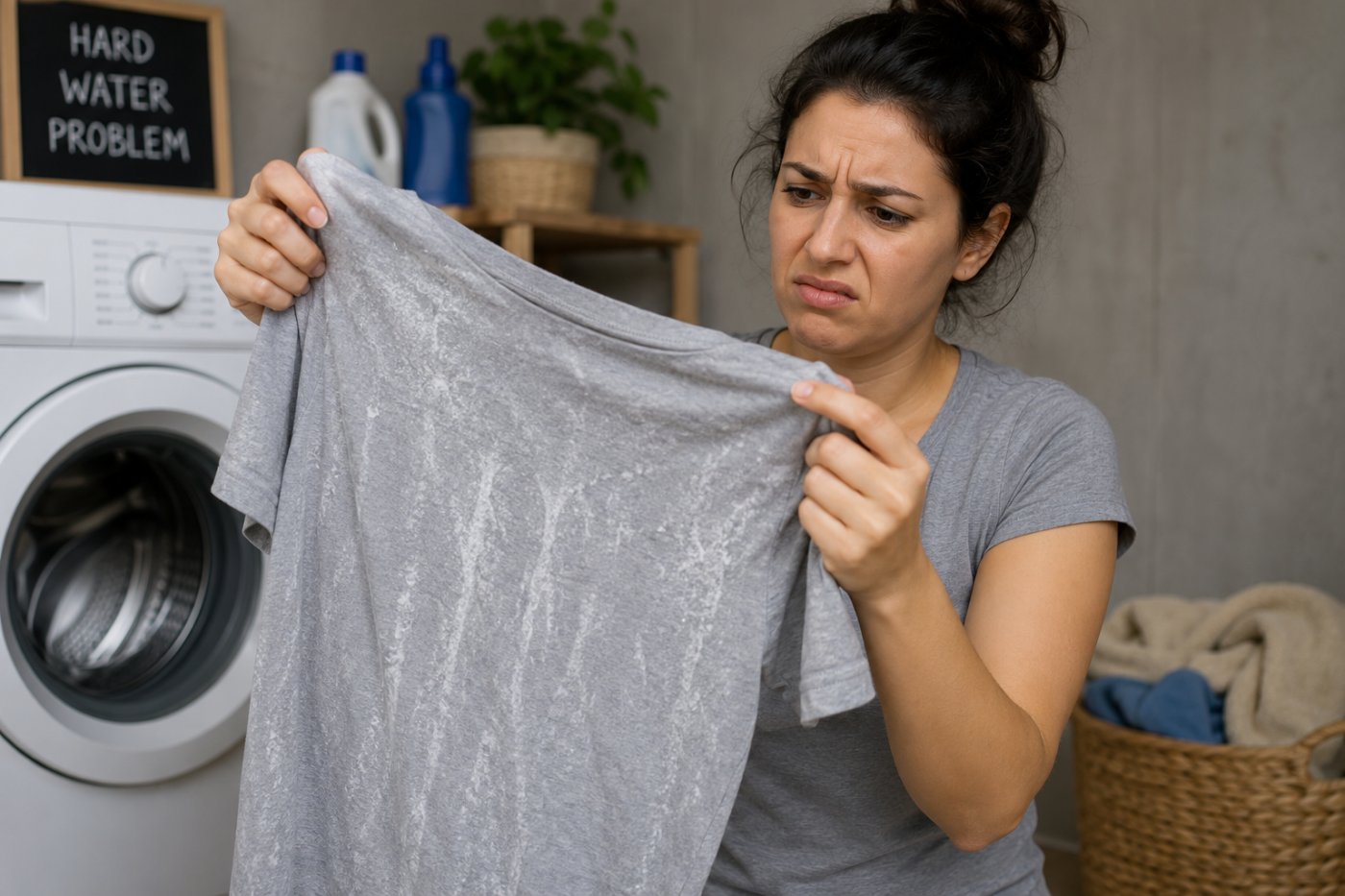
When hard water mixes with laundry detergent, something frustrating happens: the calcium and magnesium ions in the water bind with the soap before it even gets a chance to clean your clothes. This creates a sticky, insoluble substance called soap scum — and some of it ends up trapped in the fibers of your clothing.
Over time, that mineral residue builds up layer by layer in the fabric. What you're left with is laundry that feels rough, stiff, and scratchy — even though you just washed it. Your towels lose their fluffiness. Your t-shirts feel more like sandpaper. Your workout clothes feel like they're coated in something you can't quite describe.
It's not just unpleasant. That mineral buildup is actually breaking down your fabric fibers faster than normal wear would.
Why Your Detergent Isn't Working Like It Should
Here's something that might surprise you: when you're washing in hard water, a significant portion of your laundry detergent is being "used up" just fighting the minerals in the water — not cleaning your clothes.
That's why so many people dealing with hard water end up pouring in more and more detergent, hoping to get cleaner results. But using extra detergent in hard water actually makes the stiffness problem worse. More soap means more residue left behind in your fabric, which means stiffer, heavier, duller-looking laundry.
You can literally spend more money on detergent and get worse results — all because of the water.
The Dinginess Problem
Beyond stiffness, hard water does something else to your clothes that's hard to miss once you notice it: it makes them look dingy.
Your whites stop looking white. Your bright colors start to fade faster. That's because the mineral deposits that settle into your fabric also trap dirt particles, making it harder to rinse clothes truly clean. Even after a full wash cycle, your laundry is carrying mineral buildup and leftover soil that just didn't come out.
If your favorite white shirts have developed a grayish or yellowish tint that won't wash out, hard water is a very likely cause.
What About "Sensitive Skin" Reactions?
If anyone in your household has complained about itchy skin after wearing freshly washed clothes, hard water could be to blame there too. The mineral residue and excess detergent left in fabric doesn't just affect the way clothes feel in your hands — it can irritate your skin while you're wearing them.
This is especially common with children's clothing and activewear that sits close to the skin for extended periods.
Can You Fix It Without Treating Your Water?
There are some workarounds people try — white vinegar in the rinse cycle, for example, can help dissolve some mineral buildup. And there are detergents formulated specifically for hard water. These can provide some relief.
But here's the reality: they're treating the symptom, not the problem. You're still starting every load with hard water, and you're still fighting an uphill battle every wash. You'll spend more time, more money on specialty products, and get inconsistent results.
The actual solution is to address the water before it ever hits your clothes.
How a Water Softener Changes Everything
A water softener removes the calcium and magnesium from your water before it reaches your washing machine — and the difference in your laundry is noticeable almost immediately.
With softened water:
- Your detergent actually lathers and works the way it's supposed to. You'll likely use less of it and get better results.
- Your clothes come out soft and fluffy, the way they felt when they were new.
- Colors stay brighter longer because there's no mineral residue trapping dirt in the fibers.
- Whites stay white instead of developing that hard-water gray or yellow tinge.
- Towels feel like towels again — absorbent and soft, not rough and scratchy.
Many people report being able to cut their detergent use in half after switching to softened water, which means the water softener literally pays for itself in detergent savings over time — before you even factor in the extended life of your clothing and appliances.
Don't Forget What Hard Water Is Doing to Your Washing Machine
It's not just your clothes that suffer. Hard water leaves mineral scale buildup inside your washing machine too — on the drum, the hoses, the heating elements, and the internal components. Over time, that buildup reduces your machine's efficiency, creates odor problems, and shortens its lifespan.
A water softener protects your machine just as much as it protects your laundry.
The Bottom Line
If your laundry feels stiff, looks dull, and your detergent doesn't seem to be doing much, your water is working against you. In Florida, that's an extremely common problem — because Florida water is hard, and most homes don't have any treatment in place to address it.
A properly sized water softener is the most effective solution. It makes your detergent work better, keeps your clothes feeling soft and looking bright, and protects your washing machine from mineral damage.
If you're not sure whether hard water is affecting your home, a simple water test can tell you everything you need to know. And once you see those numbers, the stiff laundry will make a lot more sense.