
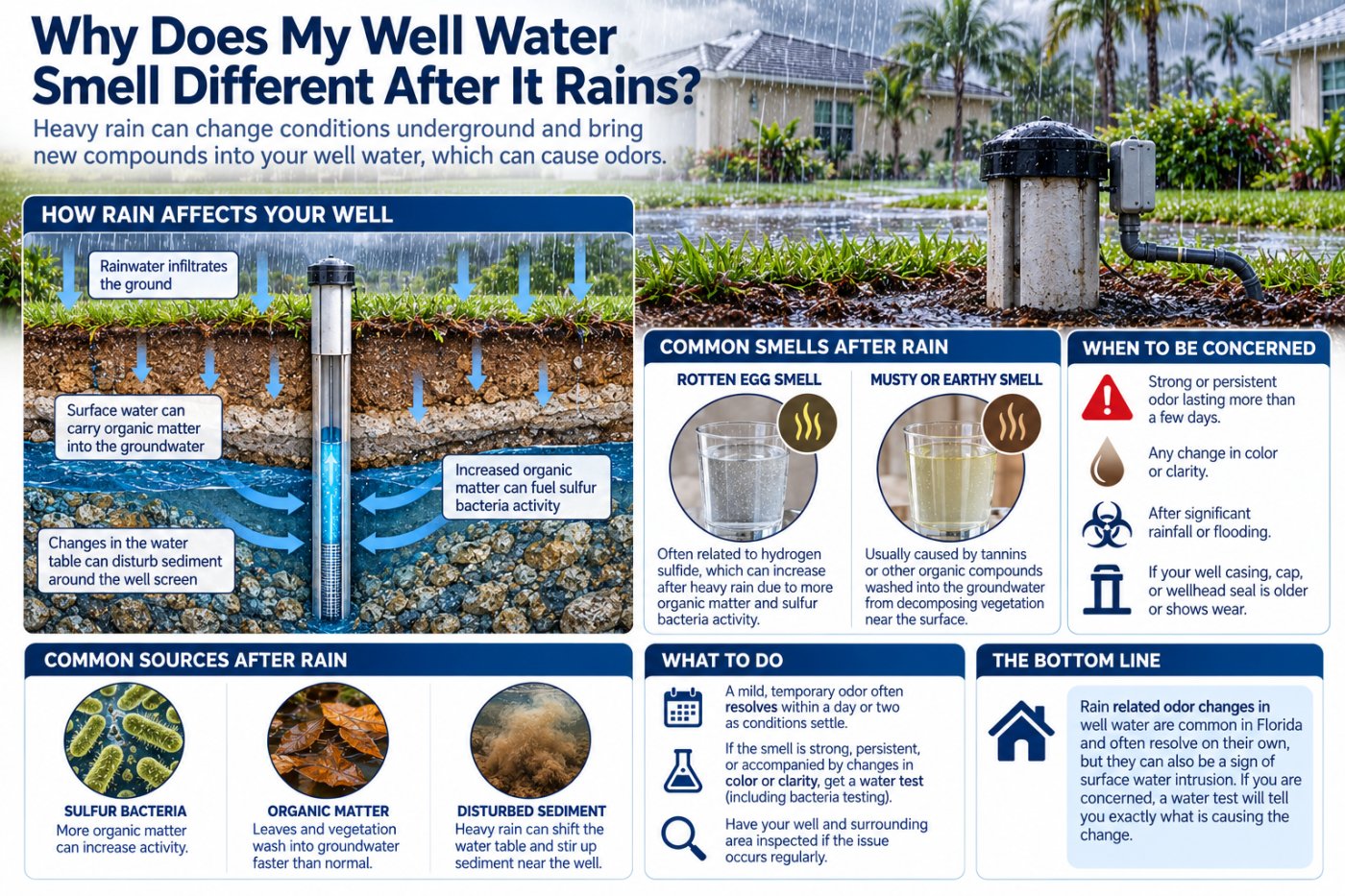
If you have noticed your well water developing an odor after a heavy rain, particularly in Florida during the summer storm season, you are not imagining it. This is a common and well understood phenomenon, and while it is not always cause for alarm, it is worth understanding exactly what is happening underground and when the smell signals something worth having tested.
Why Rain Affects Your Well Water at All
Your well draws from groundwater, and heavy rainfall changes conditions in the aquifer surrounding your well in several ways at once. Rapid infiltration of surface water can temporarily shift the water table, disturb sediment that has settled around the well screen, and introduce organic matter that was sitting on the surface into the groundwater system faster than normal, gradual percolation would. In Florida, where heavy, sudden rainfall is common for much of the year, this effect is more pronounced than it would be in a region with slower, steadier precipitation patterns.
The Most Common Cause: Increased Sulfur Odor
A rotten egg smell that becomes stronger or more noticeable after rain is often related to hydrogen sulfide, the same compound covered in our article on what sulfur water is and why it smells so bad. Heavy rain can temporarily increase the concentration of organic matter and sulfur bacteria activity near your well, particularly if your well is shallow or the surrounding soil has significant organic content, both of which are common in parts of Florida.
A Musty or Earthy Smell Points Toward Organic Matter
If the smell after rain is more earthy or musty than sulfurous, this often points toward increased tannins or other organic compounds being carried into the groundwater from decomposing vegetation near the surface. This is generally not a health concern on its own, but it does indicate your well may be more directly connected to surface conditions than ideal, which is worth understanding for your overall water management approach.
When This Points to Something More Serious
The concern with any rain related change in your well water is not the smell itself, but what the smell might indicate about surface water intrusion into your well. If heavy rain is disturbing your aquifer enough to change the smell, it raises the question of whether surface contaminants, including bacteria, could be finding a similar path into your water supply. This is especially relevant if your well casing, cap, or wellhead seal is older or shows any visible wear, or if you experienced any flooding near the wellhead during the storm.
What to Do When You Notice This
A single instance of mild odor change after a typical rainstorm is common and often resolves on its own within a day or two as conditions in the aquifer settle. However, if the smell is strong, persistent beyond a few days, accompanied by any change in color or clarity, or occurs after a significant flooding event, this is not something to guess about. A water test, specifically including bacteria testing, tells you definitively whether the rain event affected your water's safety rather than just its smell.
The Bottom Line
Rain related odor changes in well water are common in Florida and often resolve without intervention, but they can also be an early signal of surface water intrusion worth taking seriously, particularly after significant storms. If you are noticing this pattern regularly, or if a recent change has you concerned, do not guess at the cause.
Dependable Water Treatment can test your well water and identify exactly what is causing changes in smell after rain. Call us at 407-242-7150 or contact us online to schedule a test.