
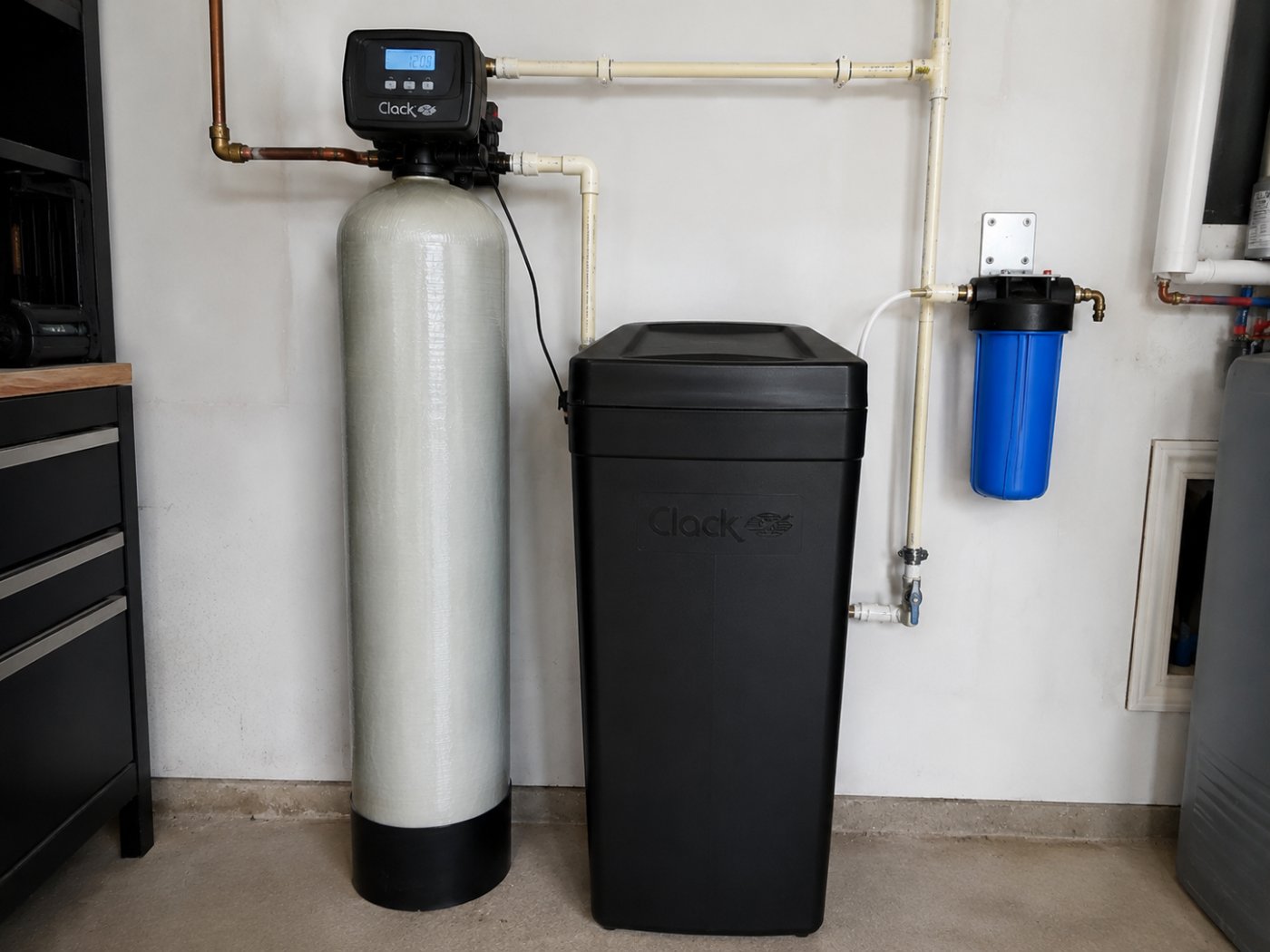
A water softener is one of those appliances that works quietly in the background every single day — and because it doesn't make noise or demand attention, it's easy to forget it needs maintenance at all. But like any hardworking appliance, a water softener needs regular attention to keep performing at its best. Ignore it long enough and you'll start noticing the signs of hard water creeping back into your home before you realize what's happening.
The good news is that water softener maintenance is simple and inexpensive when you stay on top of it. Here's what you need to know.
What a Water Softener Actually Does That Requires Maintenance
To understand why maintenance matters, it helps to quickly understand how a water softener works.
Your water softener contains a resin tank filled with thousands of tiny resin beads. These beads attract and capture the calcium and magnesium ions in your hard water, replacing them with sodium ions — a process called ion exchange. Over time, those resin beads become saturated with calcium and magnesium and can no longer do their job.
That's where salt comes in. During a process called regeneration, the softener flushes the resin beads with a salt brine solution, which strips the calcium and magnesium off the beads and flushes them down the drain. The beads are refreshed and ready to soften water again.
This cycle happens automatically — but it requires salt to work. And beyond salt, there are other components that need periodic attention to keep everything running properly.
Salt — The Most Frequent Maintenance Task
Checking and refilling your salt is the most routine maintenance task for a water softener, and how often you need to do it depends on a few factors:
- How hard your water is. The harder your water, the more salt your softener uses during regeneration.
- How much water your household uses. More people, more water use, more frequent regeneration cycles, more salt consumed.
- The size and efficiency of your softener. Newer, high-efficiency softeners use less salt per regeneration than older models.
For most Florida households, checking the salt level every 2 to 3 weeks is a good rule of thumb. Some households go through salt faster and may need to check monthly. Others with smaller households and less water use may find every 4 to 5 weeks is sufficient.
When you check the salt, you're looking for two things: the level and the condition. The salt should be at least halfway up the brine tank. And the salt itself should be loose and free-flowing — not hardened into a solid crust.
Salt Bridges and Salt Mushing — What They Are and Why They Matter
Two common salt-related problems can affect your water softener's performance without you realizing it.
Salt bridging happens when a hard crust forms across the top of the salt in the brine tank, creating a hollow space underneath. The softener thinks it has salt available, but the brine solution can't actually dissolve the salt because of the crust blocking contact. Your softener goes through its regeneration cycle without actually recharging the resin — and your water stops being softened.
You can check for a salt bridge by pressing down on the salt surface with a broom handle or similar tool. If it feels solid but hollow underneath, you have a bridge. Breaking it up and adding fresh salt resolves the issue.
Salt mushing is a different problem — old, degraded salt dissolves into a thick sludge at the bottom of the brine tank instead of dissolving cleanly into brine solution. This sludge can block the brine draw and prevent proper regeneration. Salt mushing typically requires cleaning out the brine tank completely and refilling with fresh salt.
Using high-quality salt and not letting the tank run completely empty before refilling helps prevent both of these issues.
Resin Bed — What It Needs and When
The resin beads inside your softener are designed to last a long time — typically 10 to 15 years under normal conditions. But certain water conditions can shorten that lifespan significantly.
Iron is the biggest enemy of resin beads in Florida. If your well water contains iron and it's not being pre-filtered before reaching the softener, iron can foul the resin beads over time — coating them and reducing their ability to exchange ions effectively. This is called iron fouling, and it's one of the most common reasons softeners in Florida underperform.
Resin cleaner is a product you can add to your brine tank periodically — typically every 3 to 4 months — that helps remove iron and other contaminants from the resin beads and keeps them working efficiently. If your water has significant iron content, this is an important part of your maintenance routine.
If your resin bed becomes severely fouled or simply reaches the end of its lifespan, the resin can be replaced without replacing the entire softener unit — which is significantly less expensive than a full system replacement.
The Brine Tank — Periodic Cleaning
Most water softener owners never clean their brine tank, and in many cases it goes years without needing it. But over time, sediment, undissolved salt, and other debris can accumulate at the bottom of the tank and affect performance.
A thorough brine tank cleaning is recommended every year depending on your water quality and salt type. The process involves emptying the tank, removing any remaining salt and sludge, rinsing the tank thoroughly, and refilling with fresh salt. It's not a complicated job, but it makes a noticeable difference in system performance.
Venturi Valve — A Small Part That Causes Big Problems When Dirty
The venturi valve is a small component inside your softener that creates the suction needed to draw brine from the tank into the resin during regeneration. It's a simple piece, but it can get clogged with sediment, iron deposits, or salt residue — and when it does, your softener can't regenerate properly.
Cleaning the venturi valve is a simple task that involves removing it, rinsing it in warm water, and reinstalling it. It should be checked and cleaned once or twice a year as part of routine maintenance. If your softener suddenly stops softening water and the salt level looks fine, a clogged venturi valve is one of the first things to check.
Annual Professional Service — Is It Worth It?
For most homeowners, staying on top of salt levels and doing periodic checks is sufficient for day-to-day maintenance. But an annual professional service visit is worth considering, especially in Florida where water quality challenges like iron, sulfur, and high hardness put extra demands on your system.
During a professional service visit, a technician will:
- Test your water to confirm the softener is performing correctly
- Check and clean the venturi valve and injector
- Inspect the resin bed and assess its condition
- Check regeneration settings and adjust if needed based on current water usage
- Inspect the brine tank and address any salt issues
- Check all seals, connections, and components for wear
Think of it like an annual checkup. Your softener may seem fine, but a trained eye can catch small issues before they become expensive problems.
Signs Your Water Softener Needs Attention Right Now
You don't always have to wait for a scheduled maintenance interval. These are signs that something may be wrong with your softener and it needs attention sooner rather than later:
- Hard water symptoms returning — spots on dishes, stiff laundry, scale on faucets
- Salt level not going down — may indicate a salt bridge or a softener that isn't regenerating
- Salt level dropping very fast — may indicate the softener is regenerating too frequently due to incorrect settings
- Water in the brine tank is unusually high — may indicate a drainage issue
- Softener making unusual sounds during regeneration
- Orange or discolored water — may indicate iron fouling of the resin bed
- Salty taste in your water — may indicate the softener is using too much salt or has a brine draw issue
Any of these symptoms is a signal to check your system or call a professional.
How Long Should a Water Softener Last?
A well-maintained water softener should last 15 to 20 years in most cases. Some last even longer. The key word is well-maintained — a softener that's neglected, run with low salt, or exposed to high iron without proper pre-treatment will fail significantly sooner.
In Florida, where water conditions are demanding, proper maintenance isn't optional if you want to get the full lifespan out of your investment. The cost of staying on top of salt and periodic cleaning is minimal compared to the cost of premature system replacement.
A Simple Maintenance Schedule to Follow
To make it easy, here's a quick reference:
- Every 2 to 3 weeks: Check salt level and top off as needed. Look for salt bridges.
- Every 3 to 4 months: Add resin cleaner to the brine tank (especially important with iron in your water).
- Once or twice a year: Clean the venturi valve and injector. Check all settings.
- Every 1 to 2 years: Clean out the brine tank completely.
- Annually: Consider a professional service visit to test performance and inspect all components.
The Bottom Line
A water softener doesn't take much to keep running well — but it does take something. Staying on top of salt levels, watching for warning signs, and doing periodic cleaning keeps your system performing the way it's supposed to and protects your investment for the long haul.
If you can't remember the last time you checked your softener, now is a good time to take a look. A few minutes of attention today can prevent a much bigger problem down the road.
Dependable Water Treatment services and maintains water softeners throughout Florida. If your softener isn't performing like it used to, or if you just want peace of mind that everything is working correctly, contact us to schedule a service visit.