If your house is on well water in Florida, you’re dealing with a completely different situation than someone on city water.
That’s important because a lot of the advice you’ll find online treats all water the same.
It isn’t.
Well water in Central Florida often contains:
- Hardness minerals
- Iron
- Sulfur
- Sediment
Sometimes all at once.
So when you start looking for the “best” water softener, the real answer depends on what’s actually in your water.
Because in many cases, a softener alone is only part of the solution.
Why Well Water Is Harder to Treat
City water is at least somewhat predictable.
Well water isn’t.
Your water comes directly from underground sources, and those conditions vary from property to property.
One house may only have hard water.
Another house a mile away may also have:
- Rotten egg smell
- Heavy iron staining
- Sediment issues
That’s why no legitimate company should recommend a system before testing your water first.
The Most Common Well Water Problems in Florida
Hard Water
This is the baseline issue in most Florida wells.
High calcium and magnesium levels create:
- Scale buildup
- Appliance wear
- Soap problems
- Reduced water heater efficiency
That’s what a traditional water softener is designed to handle.
Iron
Iron is extremely common in Florida wells.
You’ll usually notice:
- Orange or rust-colored staining
- Metallic taste
- Staining in toilets and sinks
The problem is that high iron levels can damage or overwhelm the wrong softener system.
Sulfur
This is the classic rotten egg smell.
Sulfur issues often require:
- Oxidation systems
- Air injection
- Specialized filtration
A standard softener alone usually won’t solve sulfur problems properly.
Sediment
Florida well water can also contain sand, silt, or fine sediment.
That extra material causes:
- Clogged fixtures
- Valve wear
- Reduced equipment lifespan
That’s why many systems also include sediment pre-filtration.
So What’s the Best System?
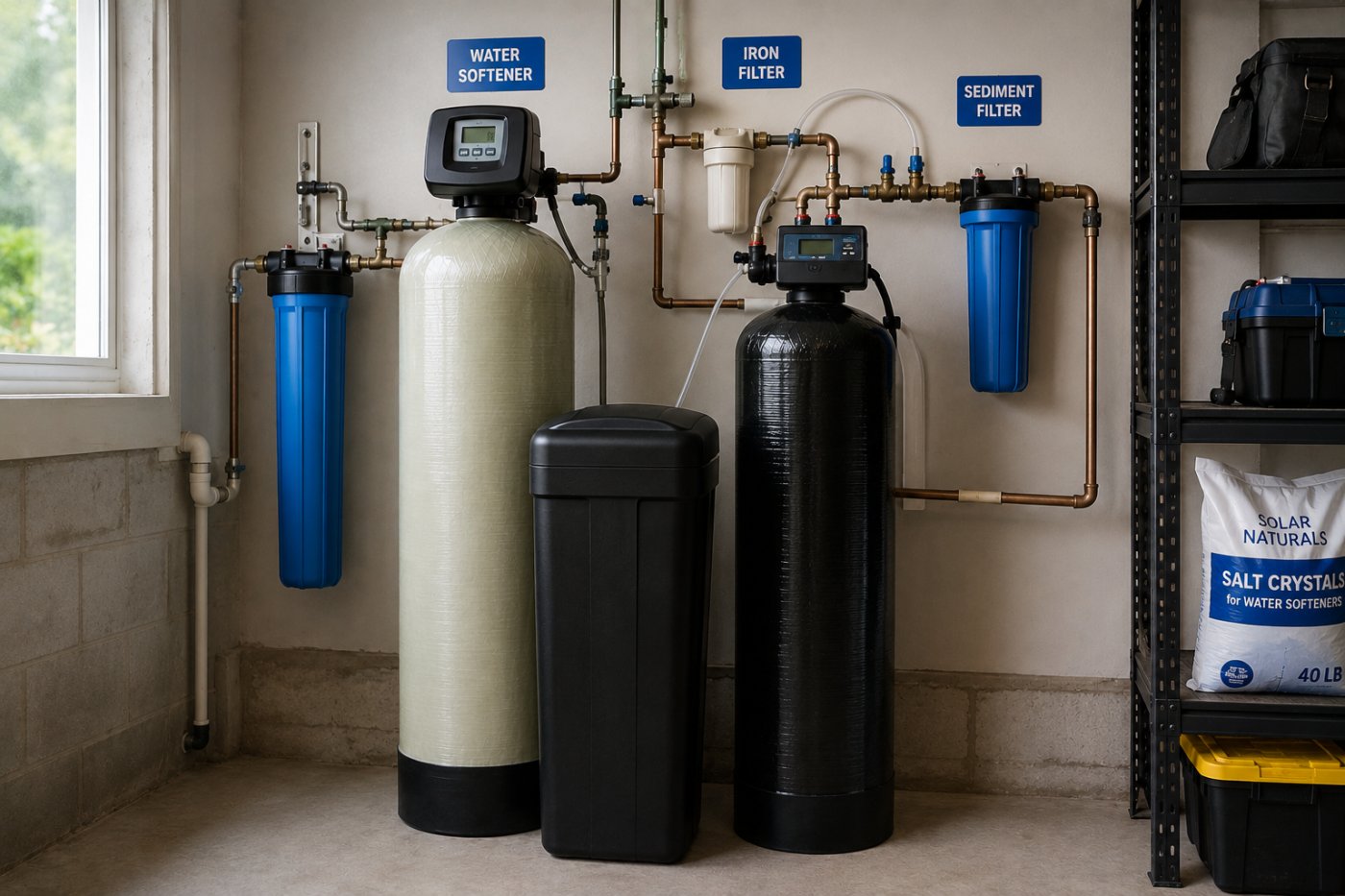
The best setup is usually a combination system designed around your specific water conditions.
That may include:
- Water softener
- Iron filter
- Sulfur treatment
- Sediment filtration
Trying to solve every problem with one piece of equipment usually doesn’t work well long term.
What Makes a Good Water Softener for Well Water
Proper Sizing
This is one of the biggest mistakes people make.
A system that’s too small:
- Regenerates constantly
- Wastes salt and water
- Wears out faster
- Performs poorly during high usage
The system should be sized for:
- Water hardness
- Household size
- Water usage patterns
Not just square footage.
Quality Control Valve
The valve is essentially the brain of the system.
A low-quality valve is one of the fastest ways to end up with:
- Leaks
- Constant repairs
- Poor regeneration cycles
This is one reason professional-grade systems usually outperform cheap online systems.
Correct Resin Type
Not all resin is the same.
Some well water conditions, especially high iron, require more durable resin designed to handle harsher conditions.
Using the wrong resin can shorten system lifespan significantly.
Why Cheap Systems Often Fail on Well Water
A lot of low-cost systems are designed around ideal conditions.
Florida well water is rarely ideal.
Cheap systems often struggle with:
- High hardness
- Iron loading
- Sulfur exposure
- Sediment buildup
That’s why some homeowners end up replacing systems much earlier than expected.
Do You Need More Than Just a Softener?
A lot of the time, yes.
This is where testing becomes critical.
For example:
- Hardness + iron = different setup
- Hardness + sulfur = different setup
- Heavy sediment = additional protection needed
The best-performing systems are usually built in stages so each piece of equipment handles a specific problem correctly.
What About Salt-Free Systems?
Salt-free systems get marketed heavily online, especially to Florida homeowners.
The issue is that most of them:
- Do not remove hardness minerals
- Do not handle iron well
- Do not solve sulfur problems
For true Florida well water conditions, traditional ion exchange softeners are usually much more effective.
How Long Should a Well Water Softener Last?
A properly installed, correctly sized system can last many years.
But lifespan depends heavily on:
- Water quality
- Maintenance
- Equipment quality
- Installation quality
Well water is generally harder on equipment than city water, which makes proper system design even more important.
Why Water Testing Matters Before Buying Anything
This is the step that determines everything.
Without testing, nobody actually knows:
- Your hardness level
- Iron concentration
- Sulfur content
- Sediment load
And without that information, system recommendations are basically guesswork.
The Biggest Mistake People Make
Most people try solving well water problems one symptom at a time.
They:
- Replace fixtures
- Add random filters
- Buy small point-of-use systems
But the actual problem is usually happening at the whole-house level.
That’s why treating the water correctly at the source typically works much better long term.
Bottom Line
The best water softener system for well water in Florida depends entirely on what’s in your water.
For many homes, the right solution isn’t just a softener.
It’s a properly designed system that handles:
- Hardness
- Iron
- Sulfur
- Sediment
The only way to know what your home actually needs is through proper testing first.
Get a Free Water Test
Dependable Water Treatment offers free water testing in Central Florida so you can find out exactly what’s in your well water and what system actually fits your home.
Call 407-242-7150 or request a free water test today.