Your home appliances are a significant investment. Your water heater, dishwasher, washing machine, refrigerator ice maker, and coffee maker together represent thousands of dollars — and most of them are designed to last a decade or more with normal use. But in a Florida home with untreated hard water, "normal use" isn't what's happening. Every time those appliances use water, they're being exposed to mineral-laden water that slowly damages them from the inside out.
Hard water doesn't destroy appliances overnight. It works gradually, quietly, and consistently — shortening lifespans, reducing efficiency, and driving up repair and replacement costs in ways that most homeowners never connect back to their water quality.
The Mechanism: How Scale Damages Appliances
The damage hard water does to appliances all comes back to one process: scale formation.
When hard water is heated — or even just when it sits in contact with surfaces — the dissolved calcium and magnesium minerals precipitate out of the water and bond to whatever surface they're touching. This creates scale: a hard, chalky, white or yellowish mineral deposit that builds up layer by layer over time.
Scale is an excellent insulator, which is a problem for any appliance that needs to transfer heat efficiently. It's also abrasive, which is a problem for moving parts. And it gradually narrows the internal passages water flows through, which is a problem for anything that depends on consistent water flow.
Every appliance in your home that uses water is subject to this process — and in Florida, where water hardness levels are among the highest in the country, the process moves faster than it would in most other states.
Water Heater
The water heater takes the hardest hit from hard water, for a simple reason: it heats water. And heating water accelerates mineral precipitation dramatically.
Scale builds up on the heating element and the bottom of the tank. As that scale layer thickens, the heater has to work harder and longer to heat the same amount of water — reducing efficiency and increasing energy costs. Hot spots form where the tank gets much hotter than it should, weakening the steel and the lining over time. The anode rod depletes faster in hard water, removing the protection it provides against corrosion.
A water heater that should last 12 to 15 years in a home with treated water may fail in 6 to 8 years in a Florida home with untreated hard water. In some cases even sooner.
Tankless water heaters — often chosen for their longevity and efficiency — are particularly vulnerable to scale damage in their narrow heat exchanger passages. Most manufacturers specifically require treated water to maintain warranty coverage.
Dishwasher
Your dishwasher runs hot water through its system multiple times per cycle, every time you run it. Scale accumulates on the heating element, inside the spray arms, and throughout the internal components.
Clogged spray arm holes reduce water pressure and coverage, meaning dishes don't get as clean. The heating element coated in scale struggles to maintain proper wash and dry temperatures. Seals and gaskets — already vulnerable to the chemical effects of hard water — dry out and crack faster than they should.
A dishwasher in a hard water home typically shows significantly more wear at the 5 to 7 year mark than the same model in a soft water home. Repair costs mount, performance declines, and replacement comes years ahead of schedule.
Washing Machine
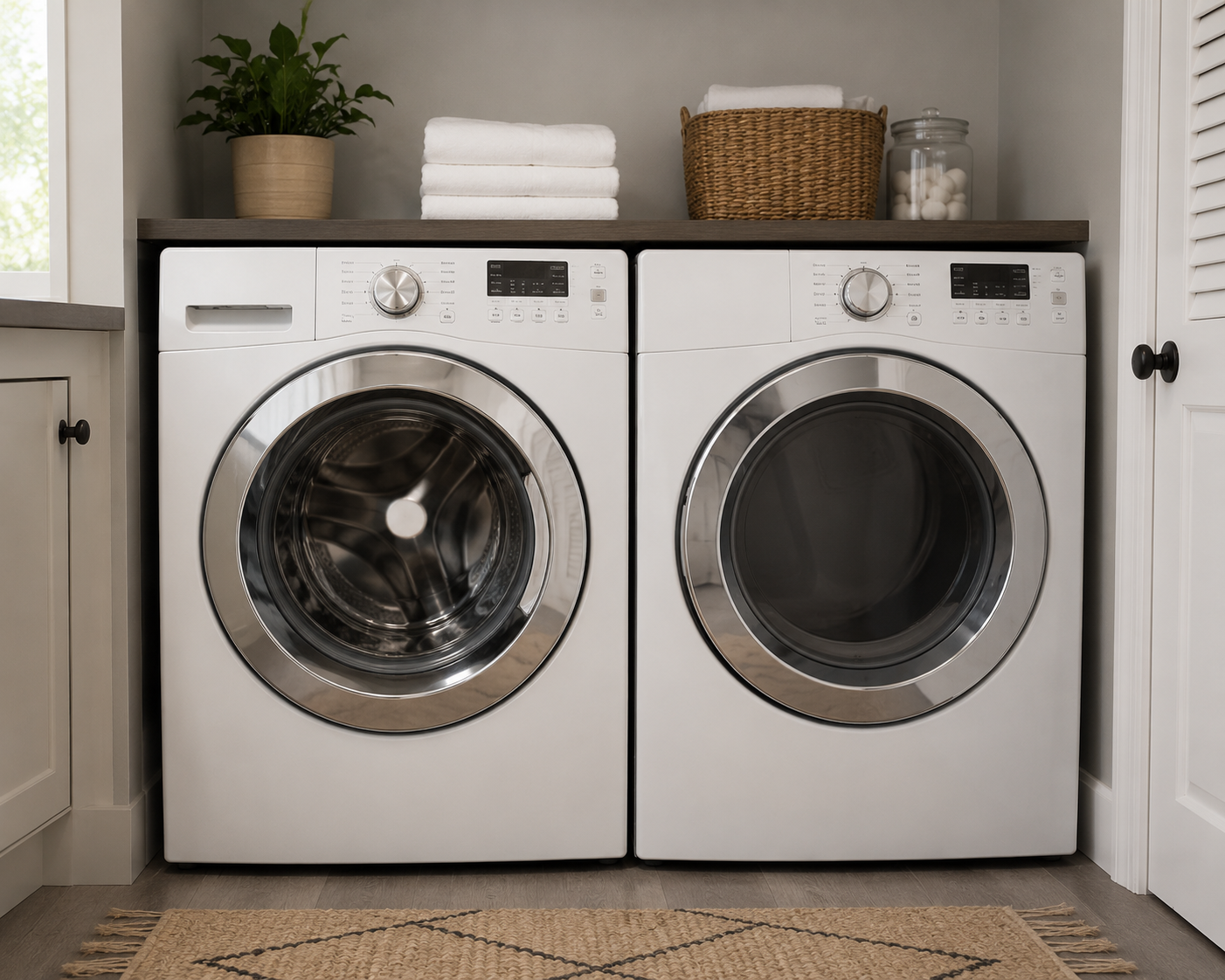
Washing machines are exposed to hard water with every single load — and in an average household, that's hundreds of loads per year. Scale accumulates on heating elements in machines that use hot water, on inlet valves, in hoses, and on internal drum components.
Beyond scale, hard water requires more detergent to achieve the same cleaning results — and excess detergent that doesn't fully rinse out can itself cause buildup and damage to internal components over time. The combination of mineral scale and soap residue accelerates wear on seals, bearings, and pumps.
Front-loading washing machines, which are more efficient but also more sensitive to buildup, tend to show the effects of hard water more quickly than top-loaders.
Refrigerator Ice Maker and Water Dispenser
If your refrigerator has a built-in ice maker or water dispenser, hard water is affecting those components too. Scale builds up in the water inlet valve, the ice maker mechanism, and the water lines running through the appliance.
The result is ice makers that produce smaller, misshapen, or cloudy ice cubes, dispensers that flow slowly, and — eventually — complete failure of the ice maker mechanism. Ice maker repairs and replacements are a common and frustrating expense that hard water accelerates significantly.
Coffee Maker
Your coffee maker heats water with every brew cycle. Scale accumulates on the heating element and inside the water reservoir and brewing lines. As scale builds up, water temperature drops below optimal brewing levels, flow rate decreases, and the flavor of your coffee suffers.
Most coffee maker manufacturers recommend regular descaling — a process that involves running a descaling solution through the machine to dissolve mineral buildup. In a Florida home with hard water, descaling needs to happen more frequently than the manufacturer's standard recommendation. Without it, scale buildup can permanently damage the heating element and internal components, shortening the machine's life significantly.
Water-Using HVAC Components
Some Florida homes have humidifiers connected to their HVAC systems, or use water-cooled equipment. These components are subject to the same scale accumulation problems — reduced efficiency, increased energy use, and shortened lifespan — as any other water-using appliance.
Pool heaters and heat pumps that use water are particularly susceptible. Scale buildup in these systems can be severe and expensive to address.
The Plumbing Connecting Everything
It's not just the appliances themselves — it's the plumbing feeding them. Hard water scale builds up inside the supply lines, inlet valves, and connections serving every appliance in your home. Partially blocked inlet valves reduce water flow to appliances that depend on consistent flow to function properly. Clogged supply lines put strain on pumps and motors that are designed to operate under normal flow conditions.
The plumbing damage is often invisible until something fails — a burst hose, a seized valve, a leaking connection — at which point the repair cost can extend well beyond the appliance itself.
The Real Cost of Hard Water on Appliances
Let's put some numbers around this. Consider a typical Florida home with:
- A water heater replaced 5 years early: $800 to $1,500
- A dishwasher replaced 3 years early: $500 to $1,200
- A washing machine replaced 4 years early: $600 to $1,400
- An ice maker repair or replacement: $200 to $500
- A coffee maker replaced annually instead of every 3 to 4 years: $100 to $300 extra
- Increased energy costs from reduced appliance efficiency: $200 to $400 per year
The cumulative cost of appliance damage from untreated hard water in a Florida home over 10 to 15 years can easily reach $3,000 to $5,000 or more — and that's before counting repair bills, service calls, and the ongoing cost of extra detergent and cleaning products.
What a Water Softener Does for Your Appliances
A water softener removes calcium and magnesium from your water at the point of entry — before it reaches any appliance in your home. With softened water flowing through your systems:
- Scale cannot form inside your water heater, dishwasher, washing machine, or any other appliance
- Heating elements maintain their efficiency because there's no insulating scale layer
- Moving parts and seals last longer without mineral abrasion and chemical degradation
- Internal passages stay clear for consistent water flow
- Appliances reach their designed lifespan rather than failing years ahead of schedule
The water softener essentially pays for itself through the appliance lifespan it protects and the energy costs it reduces — often within the first few years of operation in a Florida home with hard water.
The Bottom Line
Hard water is one of the most expensive hidden costs of homeownership in Florida. It's not dramatic — it doesn't cause sudden failures or obvious damage. It just quietly shortens the life of every water-using appliance in your home, year after year, until the repair and replacement bills start adding up to numbers that make you wonder where your money is going.
The connection to your water quality is real, it's measurable, and it's preventable. A water softener is the most effective way to protect your appliances, reduce your energy costs, and get the full value out of the equipment you've invested in.
If you've been replacing appliances more often than you feel like you should, your water is worth a closer look.
Dependable Water Treatment helps Florida homeowners protect their appliances and plumbing with water softeners and whole-home treatment systems. Contact us to schedule a water test and find out what your water is costing you.